Why Understanding Entry Requirements for Uzbekistan Matters
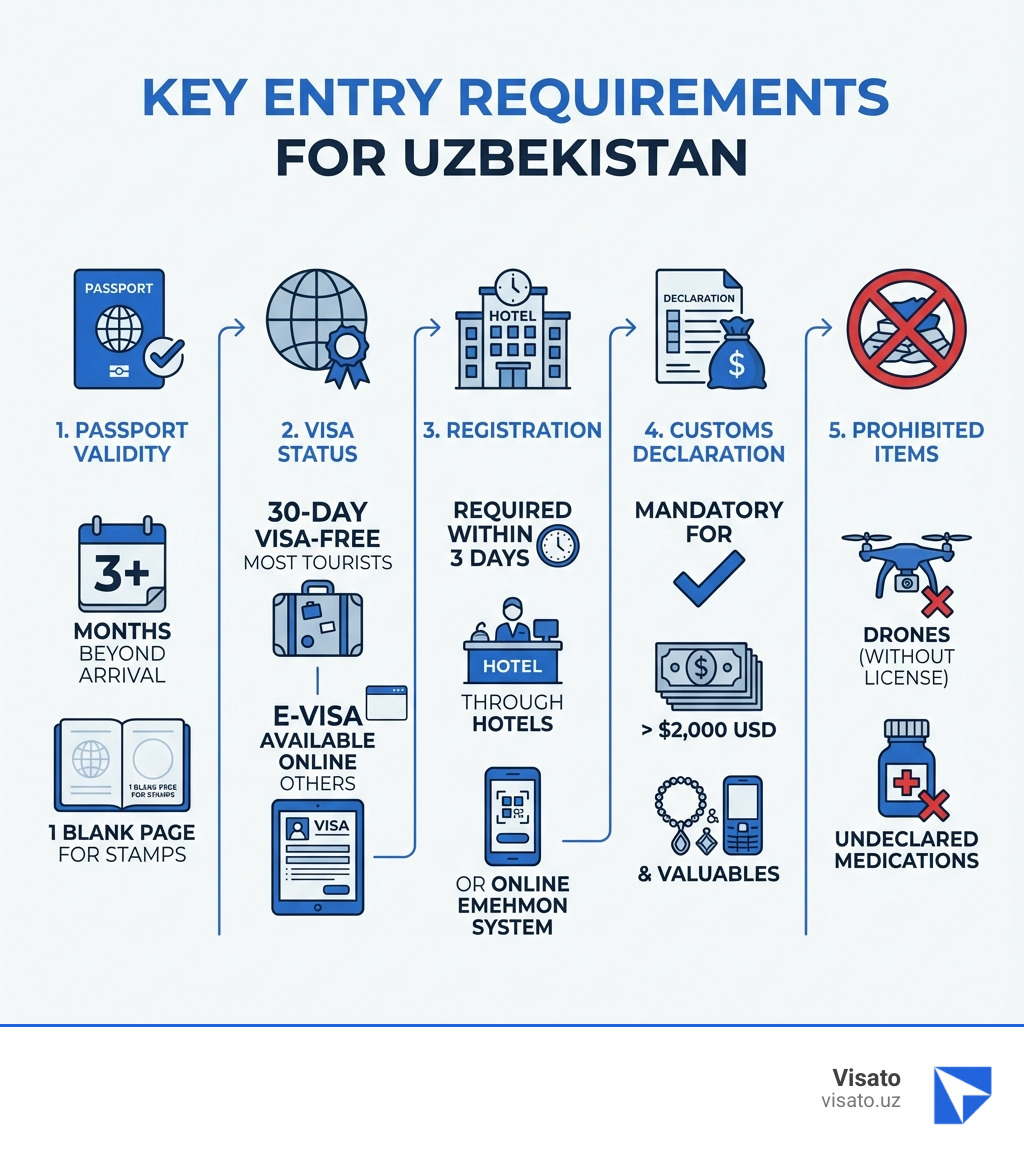
Entry requirements for Uzbekistan are straightforward but strict—knowing them upfront saves you from denied entry, fines, or deportation. Here’s what every traveler needs to know:
- Passport Validity: Must be valid for at least 3 months beyond your arrival date, with one blank page for stamps.
- Visa Status: Many nationalities enjoy 30-day visa-free entry for tourism or business. Others can apply for an e-visa online.
- Registration: All foreign visitors must register with local authorities within 3 days of arrival (hotels usually handle this).
- Customs Declaration: Declare any currency over $2,000 USD and certain medications or valuables upon arrival.
- Prohibited Items: Drones, undeclared medications, and other restricted goods require special licenses or can be confiscated.
Planning a trip to Uzbekistan—whether to explore the ancient Silk Road cities of Samarkand and Bukhara, conduct business in Tashkent, or seek medical treatment—means understanding these rules before you board your flight. Uzbekistan has simplified its visa policies in recent years, introducing visa-free regimes for dozens of countries and launching an electronic visa system. But the country still enforces strict registration, customs, and documentation requirements that can trip up unprepared travelers.
Overstaying your visa-free period, failing to register within three days, or bringing prohibited items like drones or undeclared prescription drugs can result in fines, confiscation, or even deportation. The good news? Most issues are avoidable with proper preparation.
I’m Nariman Huseynov, and I’ve helped thousands of travelers steer entry requirements for Uzbekistan through Visato, our trusted online visa platform with over five years of experience in Central Asian travel documentation. In this guide, I’ll walk you through everything you need to know—from passport validity and visa-free entry to registration rules, customs declarations, and local laws—so you can travel to Uzbekistan with confidence.
Know your entry requirements for uzbekistan terms:
- uzbekistan visa policy
- uzbekistan tourist visa requirements for indian
- uzbekistan transit visa for indian
Key Visa and Passport Entry Requirements for Uzbekistan
Navigating the initial problems of international travel begins with your passport and visa. For Uzbekistan, these documents are your golden ticket. Understanding their specific requirements is the first step toward a smooth journey. Whether you’re planning a short tourist visit or a longer stay for business, we’ll break down what you need to know.
Passport Validity and General Rules
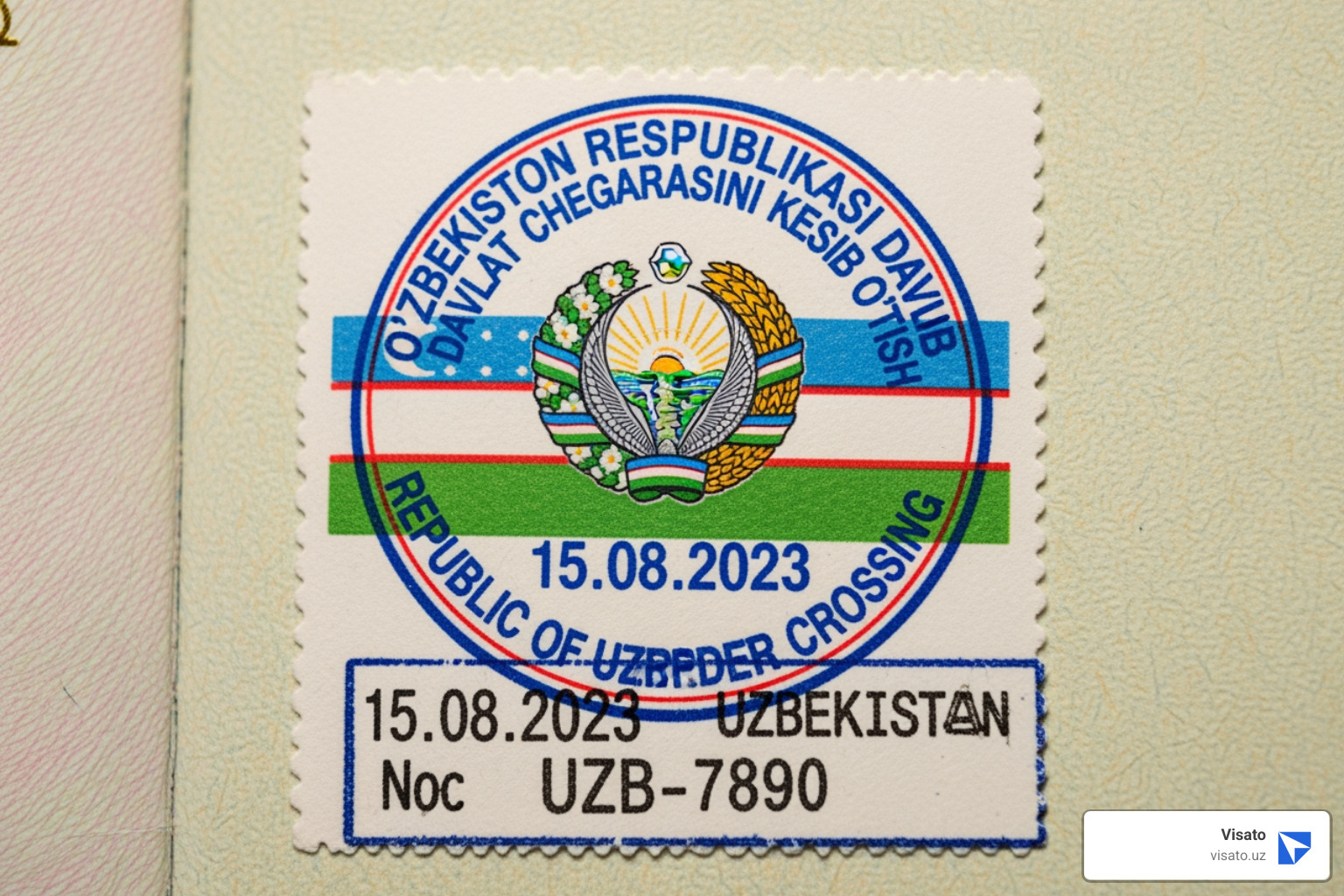
First things first: your passport. It’s not just a travel document; it’s your identity abroad. Uzbekistan has clear rules about its validity. Your passport must have an expiry date at least 3 months after the date you arrive in Uzbekistan. Some sources even suggest a 6-month validity period, so always err on the side of caution and ensure your passport has plenty of life left. Without a valid passport, you could be denied entry, which is definitely not how you want to start your adventure!
Additionally, you’ll need at least one blank passport page for entry and exit stamps. While many countries are moving towards electronic records, physical stamps are still a reality in Uzbekistan. Make sure your passport isn’t running low on empty pages. If your passport has been reported lost or stolen, attempting to use it will also result in denied entry.
It’s always a good idea to check with the Uzbek Embassy in your country or our team at Visato if you have any doubts about your passport’s suitability. Our Uzbekistan Visa Policy Guide offers comprehensive details.
Understanding the Visa-Free Entry Requirements for Uzbekistan
Uzbekistan has made significant strides in recent years to open its doors to international travelers, implementing a generous visa-free regime for many nationalities. This means that for short-term stays, many visitors can simply arrive with a valid passport and enjoy the country’s hospitality without the prior hassle of a visa application.
For citizens of a large number of countries, including Japan, Indonesia, Israel, Republic of Korea, Malaysia, Singapore, and Turkey, a 30-day visa-free stay is available. This applies to holders of all categories of passports (diplomatic, service, and civil) and covers trips for tourism or business. It’s a fantastic initiative that makes spontaneous travel to Uzbekistan much easier!
But wait, there’s more! Uzbekistan also offers specific age-based exemptions for certain nationalities. For instance, U.S. citizens who are under 16 and traveling for tourism do not require a visa. They simply need to present a valid U.S. passport at the point of entry and must be accompanied by their legal guardians. Similarly, U.S. citizens older than 55 traveling for tourism can also enter without a visa, provided they have a valid passport, for stays not exceeding 30 days. These provisions highlight Uzbekistan’s commitment to welcoming a diverse range of travelers.
It’s crucial to remember that these visa-free periods are strictly enforced. Overstaying your permitted duration, even by a single day, is considered a violation of Uzbekistan’s rules for foreign citizens and can lead to fines or even deportation. If your travel plans extend beyond the visa-free limit, you must obtain an appropriate visa beforehand. For the most up-to-date information on visa-free provisions and a comprehensive list of eligible countries, check out our Uzbekistan Visa-Free Travel 2025: New Rules and Tips guide.
Applying for a Visa: E-Visa and Physical Visas
If your nationality isn’t on the visa-free list, or if your travel purpose or intended stay exceeds the visa-free limits, don’t fret! Uzbekistan offers streamlined options for obtaining a visa.
The most convenient option for many tourists is the e-visa. This electronic visa is available for travelers wishing to enter Uzbekistan for tourism for 30 days or less. The application process is entirely online, making it quick and hassle-free. You can apply through the official e-visa portal at WWW.E-VISA.GOV.UZ. The process involves selecting your country, passport type, purpose of visit, and planned travel dates, then entering your personal details, uploading a photograph and a scan of your main passport page, providing your email, and paying the fee (typically $20 USD) online. We at Visato specialize in processing Uzbekistan e-visas, offering a fast, simple, and secure application process with 24/7 support, delivering e-visas in as little as 2-3 business days. For a detailed walkthrough, refer to our E-Visa to Uzbekistan guide.
For certain categories of travelers, such as students, investors, businesspersons planning longer stays, or those traveling for specific non-tourist purposes, a physical visa might be required. These visas are typically obtained through Uzbekistan’s consular missions abroad, including embassies or consulates in your home country. The process for physical visas can be more involved, often requiring additional documentation like invitation letters or visa support confirmation from the Ministry of Foreign Affairs of Uzbekistan. It’s always best to apply for physical visas well in advance of your travel date, as processing times can vary.
Always ensure you’re applying for the correct visa type for your travel purpose. Entering on a tourist e-visa for business activities or overstaying your permitted duration can lead to penalties. If you’re unsure which visa is right for you, our expertise at Visato can guide you through the options.
On-the-Ground Formalities: Registration and Customs
Once you’ve successfully steerd the passport and visa stage, your journey continues with on-the-ground formalities. Uzbekistan has specific requirements for registration and customs that all foreign visitors must adhere to. These steps are crucial for compliance and will help ensure a smooth stay.
Mandatory Registration for All Foreigners
This is one of the most critical entry requirements for Uzbekistan that often catches travelers off guard: the 3-day registration rule. All foreign nationals are required to register with the local authorities within three days of arrival in Uzbekistan. This is not a suggestion; it’s a mandatory legal requirement. Saturdays and Sundays count towards this 3-day period, so plan accordingly, especially if you arrive on a Friday.
The good news is that for most travelers, this process is quite simple:
- Staying at a hotel? The staff will typically handle your registration automatically upon check-in. They are responsible for submitting your details to the local district OVIR (Department of Foreign Travel and Exit) or the electronic registration system, Emehmon. You’ll usually receive a small registration slip, which you should keep safe as it might be requested upon your departure. Tourist tax is usually included in your hotel bill.
- Staying in a private house? Your host is responsible for registering you with their local district OVIR or on the electronic registration system, Emehmon. They will also pay the tourist tax on your behalf.
- Traveling in a camper van or staying in tents (i.e., not using registered accommodation)? You must register yourself. This can be done online through the electronic registration system, Emehmon. When registering online, you’ll also have to pay a tourist tax for each day of your stay. Be aware that this payment might require an Uzbek debit card, so it’s wise to clarify payment methods in advance or seek assistance from a local.
It’s also important to know that if you travel to another city within Uzbekistan and plan to stay for longer than 3 days there, you will need to register again in that new location. From the date of your initial registration, you are responsible for maintaining uninterrupted registration throughout your stay. Failure to register or maintain continuous registration can result in fines, detention, or even deportation. Always keep your registration slips or confirmation readily accessible.
Navigating Customs: Key Entry Requirements for Uzbekistan
Uzbekistan has strict customs regulations, particularly regarding currency, valuables, and certain goods. Being prepared and honest with your declarations will save you a lot of potential headaches.
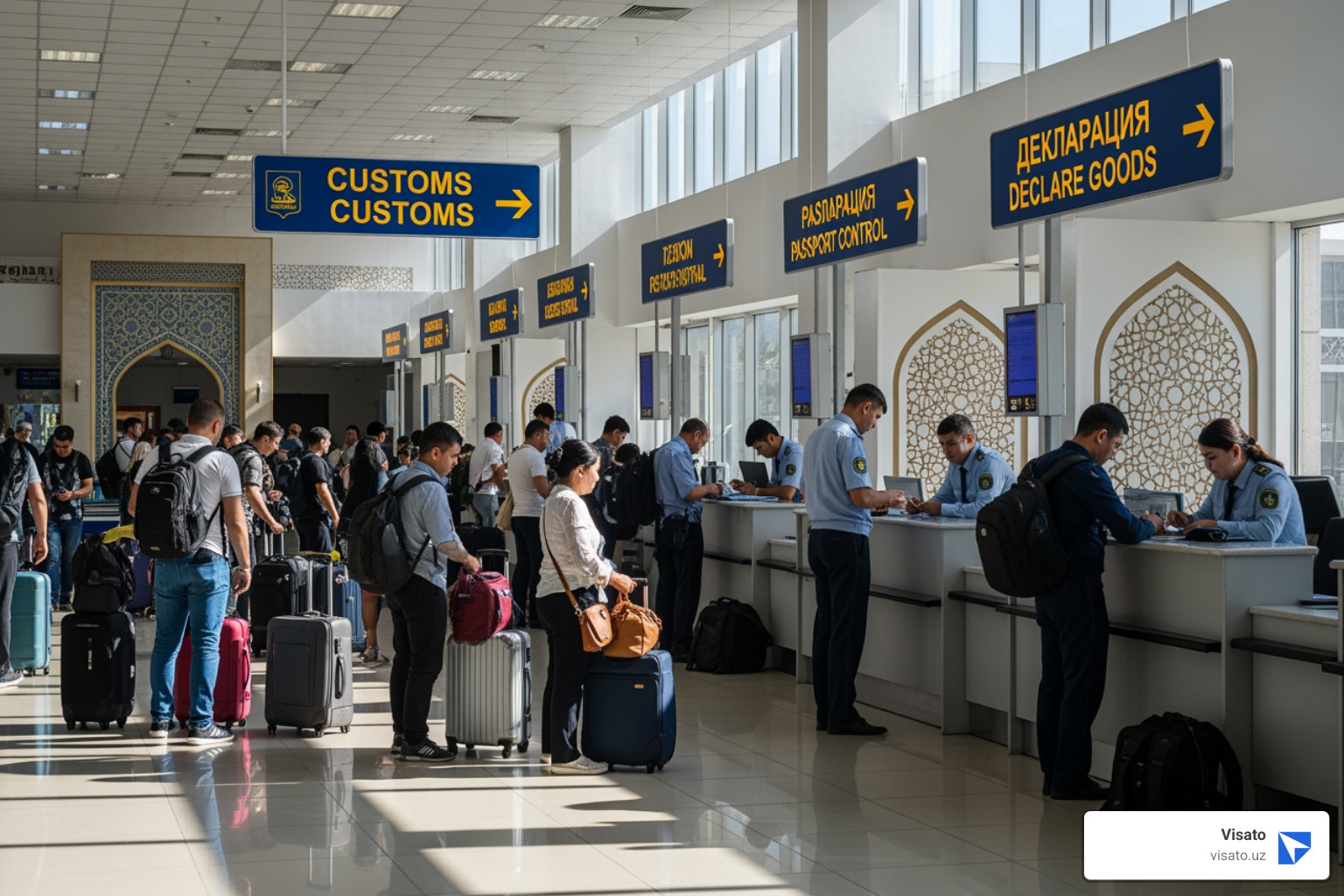
When entering Uzbekistan, you must complete a customs declaration form. This form is crucial, especially if you are carrying significant amounts of cash or valuables. The key threshold to remember for currency is $2,000 U.S. dollars or greater. If you are carrying foreign currency equivalent to this amount or more, you must declare it upon entry. You’ll fill in two copies of the customs declaration, and ensure customs officials sign and stamp both copies. Keep one copy safely with you, as you will need it when exiting the country.
Regarding valuables, if you are bringing in precious metals and gemstones weighing over 65 grams, these must also be declared.
A critical point for departure: the amount of foreign currency you take out of Uzbekistan cannot exceed the total amount you declared upon entry. If you have acquired additional foreign currency during your stay (e.g., from exchanging local currency back), you must be able to document its source. Without this documentation, you may be prevented from exiting with the extra funds.
For a comprehensive overview of what you can and cannot bring into or out of the country, refer to the official customs rules for goods.
Restricted and Prohibited Items
Beyond currency, travelers need to be acutely aware of specific restrictions on medications and the outright prohibition of certain items like drones.
-
Medication Rules: This is a particularly sensitive area. Before you travel, it is absolutely essential to check the official list of prohibited medicines and restricted medicines (available in Uzbek and Russian on the customs website). Many common medications that are readily available over-the-counter in other countries, or even prescription drugs like codeine, can be highly restricted or even prohibited in Uzbekistan. If you travel with prescription medicines, you must:
- Carry them in their original packaging.
- Have a doctor’s prescription (preferably translated into Russian or Uzbek).
- Declare them on your customs declaration form.
Failure to declare or to have proper documentation for restricted medications can lead to serious legal consequences, including fines, confiscation, or even detention. It’s always better to be overly cautious than to find yourself in a difficult situation.
-
Drone Prohibition: If you’re a drone enthusiast hoping to capture stunning aerial shots of Uzbekistan’s landscapes, we’ve got some potentially bad news. The import and use of drones in Uzbekistan are largely prohibited, with very limited exceptions. To bring a drone into the country and use it, you must obtain a specific license to import it and separate permission to operate it, both before your arrival. Attempting to enter with an undeclared drone or using one without proper authorization can result in significant fines, confiscation of your equipment, or even prison sentences. Our advice? Unless you have explicit, pre-approved licenses, leave your drone at home.
Health, Safety, and Emergencies
While Uzbekistan is generally considered a safe and welcoming destination, like any international trip, it pays to be prepared for health and safety eventualities. Knowing what to expect regarding medical care, potential risks, and who to contact in an emergency is paramount.
Health and Vaccination Recommendations
Staying healthy is key to enjoying your trip. While there are no mandatory vaccination requirements for entry into Uzbekistan (unless you’re arriving from a yellow fever risk country), we strongly recommend being up-to-date on all routine vaccinations, as advised by health organizations like the CDC or TravelHealthPro. These typically include measles-mumps-rubella (MMR), diphtheria, tetanus, pertussis, polio, and seasonal flu. For specific travel health advice and recommended vaccinations for Uzbekistan, consult TravelHealthPro’s Uzbekistan guide or your doctor well before your departure.
Regarding medical facilities, it’s important to set expectations. Medical care in Uzbekistan, particularly outside of major cities like Tashkent, may not meet Western standards. There can be shortages of supplies, and some medications might be counterfeit or unavailable. For this reason, we highly recommend purchasing comprehensive travel insurance that includes medical evacuation coverage. If you have pre-existing conditions or are an elderly traveler, consult your doctor about potential risks. The U.S. Embassy in Tashkent maintains a list of medical contacts.
Food and water safety are also crucial considerations. Tap water in many areas of Uzbekistan is not potable, so we advise sticking to bottled water for drinking, brushing teeth, and making ice. Be cautious with street food and ensure that food is thoroughly cooked and served hot. Wash your hands frequently, especially before eating. These simple precautions can help you avoid common travel ailments.
Safety, Security, and Emergency Contacts
Uzbekistan generally has a low crime rate, and many travelers report feeling safe. However, like any tourist destination, petty theft (pickpocketing, purse snatching) can occur, especially in crowded markets, tourist sites, and on public transportation. It’s wise to exercise normal precautions: keep valuables out of sight, use secure bags, and be aware of your surroundings. Our guide, Is Uzbekistan Safe for Tourists?, offers more detailed insights.
Border areas, particularly with Afghanistan, Kyrgyzstan, and Tajikistan, can pose higher risks. We advise against all travel within 5 km of the border with Afghanistan due to security concerns. Exercise a high degree of caution in areas bordering Kyrgyzstan and Tajikistan in the western Fergana Valley due to unpredictable security situations. Landmines may still be present in some former border regions, so stick to main roads and marked paths.
While the threat of terrorism exists globally, Uzbekistan has generally been stable. However, remain vigilant, especially in crowded public places, and be aware of your surroundings.
In case of emergencies:
- Reporting Crimes: If you are a victim of a crime, report it to the local police immediately. In Tashkent, dial 102 for police; in most of Uzbekistan, dial 02. Afterward, contact your embassy or consulate for assistance.
- Medical Emergencies: Dial 103 in Tashkent or 03 in most of Uzbekistan for an ambulance.
- Fire: Dial 101 in Tashkent or 01 in most of Uzbekistan.
For U.S. citizens, we highly recommend enrolling in the Smart Traveler Enrollment Program (STEP). This free service allows the U.S. Embassy to locate you in an emergency and provides you with security messages and alerts. The U.S. Embassy Tashkent is located at 3 Moyqorghon Street, 5th block, Yunusobod District, 100093 Tashkent. Their emergency after-hours telephone is +(998) (78) 120-5450.
Local Laws and Travel Practicalities
Beyond the official entry requirements, understanding local laws and cultural norms can significantly improve your travel experience in Uzbekistan. Knowing what’s acceptable and what’s not will help you avoid misunderstandings and ensure a respectful visit.
Local Laws and Special Circumstances
Uzbekistan has a unique legal and cultural landscape that travelers should be aware of:
- Dual Nationality: Uzbekistan does not legally recognize dual nationality. If you hold both Uzbek and another nationality, local authorities will treat you solely as an Uzbek citizen. This can limit the ability of your other country’s embassy to provide consular assistance.
- Drug Offenses: Uzbekistan has extremely strict laws against drug offenses. Penalties for possession, use, or trafficking of illegal drugs are severe, including lengthy prison sentences. Do not engage with or carry any illicit substances.
- Photography Restrictions: While generally welcoming to photographers, be mindful of where you point your camera. Photography of government buildings, military installations, border zones, and airports is often prohibited. When photographing people, it’s always polite to ask for permission first.
- Carrying ID: Foreigners are required to carry photo identification, such as a passport, at all times. Keep a photocopy of your passport and visa (and registration slip) in a separate, safe place.
- LGB Travelers: Sexual relations between men are illegal in Uzbekistan and punishable by imprisonment. While enforcement against foreign tourists is rare, LGB travelers should be aware of these laws and exercise discretion. Section 6 of the Human Rights Report for Uzbekistan provides further details.
- Women Travelers: Uzbekistan is generally safe for women travelers, but it’s advisable to dress modestly, particularly when visiting religious sites, to show respect for local customs. Solo women travelers may attract unwanted attention.
- Travelers with Disabilities: While Uzbek law prohibits discrimination against persons with disabilities, infrastructure and accessibility may not be up to international standards, especially outside major cities. Social acceptance is growing, but practical challenges may arise.
Getting Around: Transportation Safety
Exploring Uzbekistan’s ancient cities and vast landscapes requires navigating its transportation network. Here’s what you need to know about getting around safely:
- Road Conditions and Safety: Road conditions vary significantly. Main roads between major cities are generally improving, but secondary roads, especially in rural areas, can be poorly maintained, with potholes and unmarked hazards. Driving at night is particularly dangerous due to a lack of street lighting, unmarked obstacles, and unpredictable local driving habits. Drivers often disregard traffic laws. If you plan to drive, an International Driving Permit is required, and we advise extreme caution.
- Public Transportation:
- Taxis: It’s best to use clearly marked taxis or ride-sharing applications (available in major cities like Tashkent). Avoid unmarked taxis, as they may be unsafe or overcharge. Always confirm the fare in advance or ensure the meter is used. Never share a taxi with strangers.
- Trains: Uzbekistan’s train network, especially the high-speed Afrosiyob trains connecting Tashkent, Samarkand, and Bukhara, is a popular and generally safe way to travel. Keep your belongings secure and your documents handy. Do not leave compartments unattended and lock doors from the inside when possible.
- Buses: Long-distance buses can be crowded and their safety standards may vary. Keep your valuables with you and avoid storing bags in overhead compartments or under seats.
- For more detailed advice on navigating the country, check out our guide on How to Get Around Uzbekistan.
Frequently Asked Questions about Uzbekistan’s Entry Rules
We know you’ve got questions, and we’re here to answer them! Here are some of the most common queries we receive about entry requirements for Uzbekistan.
Do I need to register my stay in Uzbekistan if I’m only there for two days?
No, registration is mandatory within three days of arrival. If your stay is shorter than three full days, you do not need to register, but it’s wise to keep proof of your arrival/departure dates (like your flight tickets and passport entry stamp) just in case. This shows you were compliant with the rules.
Can I bring my prescription medication for anxiety into Uzbekistan?
Yes, but with strict rules. Always carry it in its original packaging with a clear doctor’s prescription (ideally translated into Russian or Uzbek). You must declare it on your customs form upon entry. It is crucial to check the official list of prohibited medicines and restricted medicines before you travel, as some psychotropic substances, often found in anxiety medications, are heavily controlled or even banned. Failure to comply can lead to serious penalties.
What happens if I overstay my 30-day visa-free period?
Overstaying your visa-free period is a serious violation of Uzbekistan’s immigration laws. You will face significant fines and potential deportation, which can also negatively impact your ability to travel to Uzbekistan or other countries in the future. If you realize you need to stay longer, you must apply for a visa extension or the appropriate visa type before your 30 days expire. This process can be complex, so proactive planning is essential. For more information, consult our Uzbekistan Visa Extension Guide.
Conclusion
Planning a trip to Uzbekistan is an exciting endeavor, and with this comprehensive guide, we hope you feel well-equipped to steer the entry requirements for Uzbekistan with confidence. Preparation is your best travel companion.
To recap the key takeaways for a smooth journey:
- Passport Validity: Ensure your passport is valid for at least three months beyond your intended stay and has a blank page.
- Visa Status: Confirm if you qualify for visa-free entry, or if you need an e-visa or a physical visa for your trip.
- Registration: Don’t forget the mandatory 3-day registration rule; most hotels will handle this for you.
- Customs Declaration: Declare currency over $2,000 USD, certain medications with prescriptions, and any other valuables.
- Prohibited Items: Leave your drones at home unless you have specific, pre-approved licenses.
By understanding and adhering to these crucial entry requirements for Uzbekistan, you can avoid unnecessary stress and fully immerse yourself in the rich history, vibrant culture, and breathtaking landscapes of this incredible Central Asian gem. From the ancient Silk Road cities to the busy markets of Tashkent, Uzbekistan promises an unforgettable adventure.
Start your journey with confidence, knowing you have all the essential information at your fingertips. For a complete overview of visa options and policies, explore our Uzbekistan Visa Policy Guide. Safe travels!