Navigating the U.S. visa application process can feel complex, but it all starts with one key document: the DS-160 form. This guide explains exactly what the DS-160 form is, walks you through its key sections, and helps you avoid common mistakes for a smoother U.S. visa application process.
What is the DS-160 Form? An Essential First Step
The DS-160, Online Nonimmigrant Visa Application, is the mandatory online form that most applicants must complete when applying for a nonimmigrant visa to the United States. It is the U.S. government’s primary method for collecting the necessary information from individuals seeking temporary entry. This includes popular visa categories such as tourism and visits (B-2), business (B-1), and academic studies (F-1). The purpose of the form is to gather your essential biographical, travel, and background information for review by a consular officer. It’s crucial to understand that this form must be fully completed and submitted online before you can schedule your interview at a U.S. embassy or consulate.
Where to Find the Official DS-160 Form
The only official place to access and complete the DS-160 form is on the U.S. Department of State’s Consular Electronic Application Center (CEAC) website. When you arrive on the site, you will first be prompted to select the location (the embassy or consulate) where you intend to apply for your visa. It is critical to use only this official government portal. Be cautious of unofficial third-party websites that may look similar but charge a fee simply to help you fill out this form; the official government form is free to complete.
Documents and Information You Need Before You Start
To ensure a smooth application process, it’s best to gather all the necessary documents and information before you begin. Having these items on hand will save you time and prevent your session from timing out. Here is a checklist of what you’ll need:
- Your valid passport: It must be valid for at least six months beyond your intended period of stay in the U.S.
- Your travel itinerary: If you have already made travel arrangements, have your flight and accommodation details ready.
- Past travel history: Be prepared to list the dates of your last five visits to the United States, if applicable.
- A digital photograph: Your photo must meet the specific requirements for U.S. visas regarding size, background, and age.
A Step-by-Step Guide to the DS-160 Sections
The DS-160 form is comprehensive, but breaking it down by section can make it much more manageable. One of the most important tips is to save your application frequently. At the beginning of the process, you will be given a unique Application ID. Write this down and save your progress regularly, as the system can time out.
Part 1: Personal, Address, and Passport Information
This initial section is straightforward but requires careful attention to detail. Your primary focus should be on entering your full name exactly as it appears in your passport, including any middle names. Any discrepancies can cause issues later. Double-check that your passport number, date of birth, and nationality are entered correctly. This part of the form establishes your official identity for the entire application.
Part 2: Travel and U.S. Contact Information
Here, you will specify the type of visa you are applying for and provide details about your trip. You’ll need to clearly state your purpose of travel, your intended arrival date, and how long you plan to stay. You will also be asked to provide the address where you will be staying in the U.S. If you have a point of contact in the United States, such as a relative, friend, or business associate, you will list their information in this section.
Part 3: Family, Work, and Education History
This section collects information about your personal background. You will be required to provide details about your immediate family, including your parents’ and spouse’s full names and dates of birth. You must also provide a history of your employment and education. It’s important to be thorough and honest, listing your previous employers and educational institutions as requested.
Part 4: Security and Background Questions
The final major section consists of a series of security and background questions that you must answer with a simple ‘yes’ or ‘no’. These questions cover topics related to health, criminal history, and security matters. It is absolutely essential to answer every question truthfully. Providing false information or attempting to conceal facts can result in a permanent visa ineligibility.
Top 5 Common Mistakes on the DS-160 (And How to Avoid Them)
Even small errors can cause significant delays in your visa application. Here are the top five mistakes applicants make and how you can easily avoid them:
- Uploading a non-compliant digital photograph: Ensure your photo meets all government specifications before you upload it. The system has a photo validation tool you can use.
- Typos in your name or passport number: This is the most critical data. Review this information multiple times before submitting.
- Leaving gaps in your employment or address history: Account for all periods of time as requested. If you were unemployed, state that.
- Not saving your application ID and losing your progress: Write down your Application ID and answer to your security question immediately. Save after completing each page.
- Submitting the form without reviewing all answers: Before you hit the final submit button, take the time to go through every answer one last time.
DS-160 vs. E-Visa: Understanding Different Application Processes
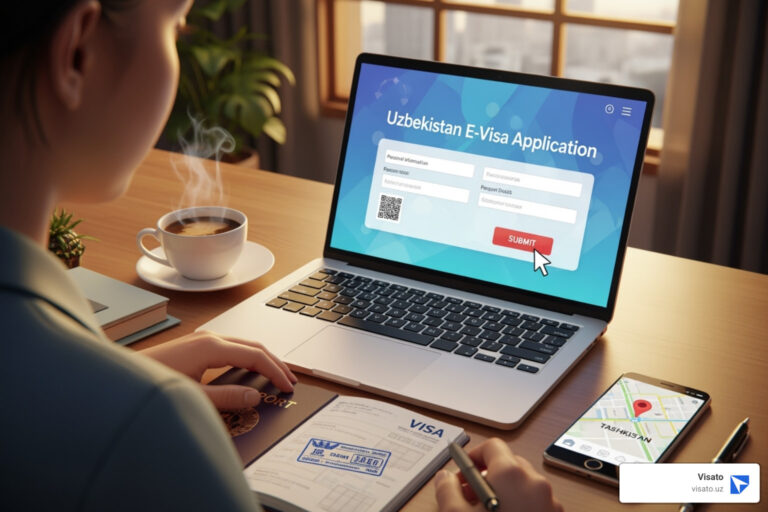
The detailed, multi-step process for a U.S. visa via the DS-160 form is not the standard for every country. As international travel evolves, many nations have adopted simpler, fully electronic visa (e-visa) systems that are completed entirely online in just a few minutes. To understand the difference, let’s compare the U.S. process with the modern e-visa system for Uzbekistan.
Key Differences at a Glance
A quick comparison highlights how streamlined travel authorization can be. While the U.S. process is thorough and requires an in-person interview, systems like the one for Uzbekistan prioritize speed and convenience for travelers.
- Process: The U.S. DS-160 is the first step in a multi-stage process that includes an interview. An Uzbekistan E-Visa is a single, fully online application from start to finish.
- Interview: An in-person interview is mandatory for most U.S. visa applicants. No interview is required for an Uzbekistan E-Visa.
- Approval Time: U.S. visa processing can take weeks or months. An Uzbekistan E-Visa is typically approved within a few business days.
- Requirements: The DS-160 requires extensive documentation and history. An E-Visa usually requires only a valid passport, photo, and payment.
Planning a trip to Central Asia? See how simple the Uzbekistan E-Visa is.
After Submission: What Are the Next Steps?
Once you electronically sign and submit your DS-160 application, you can no longer make any edits. The system will generate a confirmation page that includes a barcode. You must print and save this page, as you will need to bring it with you to your visa interview. The next step in the process is to visit the website of the U.S. embassy or consulate where you will be interviewed to pay the visa application fee and schedule your appointment.
Frequently Asked Questions
Is the DS-160 form free to fill out?
Yes, there is no government fee to fill out and submit the DS-160 form itself. However, you will be required to pay a separate non-refundable visa application fee (MRV fee) before you can schedule your interview.
How long is my submitted DS-160 valid for?
The DS-160 confirmation barcode is generally valid for one year from the date you submit the form. You must schedule your interview within this timeframe.
Can I edit my DS-160 application after I have submitted it?
No, once you submit the form, you cannot make any changes. If you discover a significant error, you will need to complete and submit a new DS-160 form. Be sure to bring the confirmation page from the new, corrected form to your interview.
What happens if my session times out while completing the form?
The DS-160 application has a 20-minute timeout feature. If your session is inactive for too long, you will be logged out. This is why it is critical to save your Application ID and save your progress after each page so you can retrieve your application and continue where you left off.
Do I need a separate DS-160 for my children?
Yes, every individual applicant, regardless of age, needs their own DS-160 form. Parents can fill out the application on behalf of their minor children.
I made a mistake on my submitted DS-160. What should I do?
If the mistake is minor (e.g., a small typo in an address), you can often correct it with the consular officer during your interview. If the mistake is significant (e.g., incorrect passport number or name), you should complete a new DS-160 form and bring the new confirmation page to your interview.
While some visa processes can be extensive, others are designed for modern travel. With services that offer a simplified online application and 24/7 expert support, you can avoid common errors and ensure a smooth journey. Planning travel to multiple destinations? Discover the fast and simple E-Visa process for Uzbekistan.