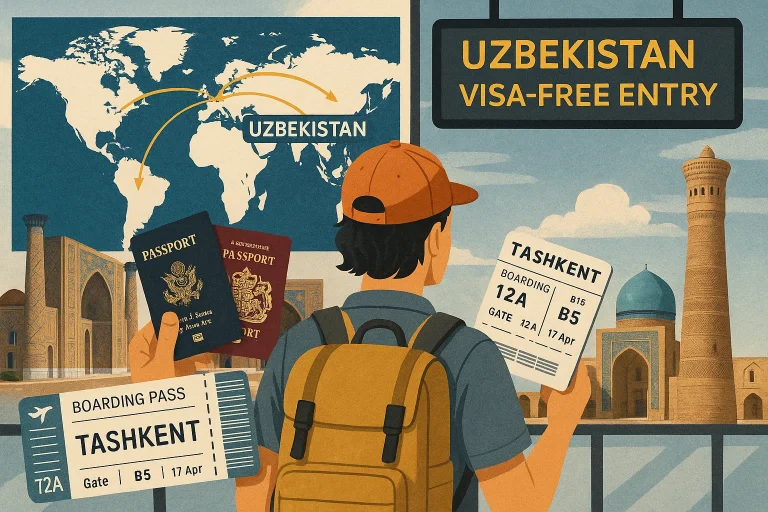
Why Uzbekistan Should Be Your Next Destination
What to see in Uzbekistan includes stunning Silk Road cities, breathtaking Islamic architecture, and vibrant bazaars that have welcomed travelers for centuries. Here’s a quick overview of the must-visit highlights:
| Category | Top Sights |
|---|---|
| Cities | Samarkand (Registan Square), Bukhara (Old Town), Khiva (Itchan-Kala), Tashkent (Metro Stations) |
| Architecture | Shah-i-Zinda Necropolis, Bibi-Khanym Mosque, Kalon Minaret, Gur-e-Amir Mausoleum |
| Culture | Chorsu Bazaar, Rishton Ceramics, Traditional Teahouses, Plov Centers |
| Nature | Chimgan Mountains, Nuratau Mountains, Aral Sea, Zaamin National Park |
Uzbekistan sits at the heart of the ancient Silk Road, a crossroads that connected East and West for over two millennia. Today, the country boasts 7 UNESCO World Heritage Sites and over 4,000 historical monuments. The cities of Samarkand, Bukhara, and Khiva showcase some of the world’s most dazzling Islamic architecture, with intricate blue tile mosaics, towering minarets, and grand madrasahs.
Beyond its history, Uzbekistan offers warm hospitality, authentic plov (the national dish), and diverse landscapes from mountain villages to the haunting Aral Sea. Whether you’re drawn to medieval architecture, local crafts, or the Silk Road experience, this Central Asian gem delivers.
This guide covers the must-see cities, iconic architecture, cultural experiences, and practical tips for your Uzbekistan adventure.
I’m Nariman Huseynov from Visato.uz. With over 5 years of experience helping travelers, I’ll share insider knowledge to make your journey unforgettable.
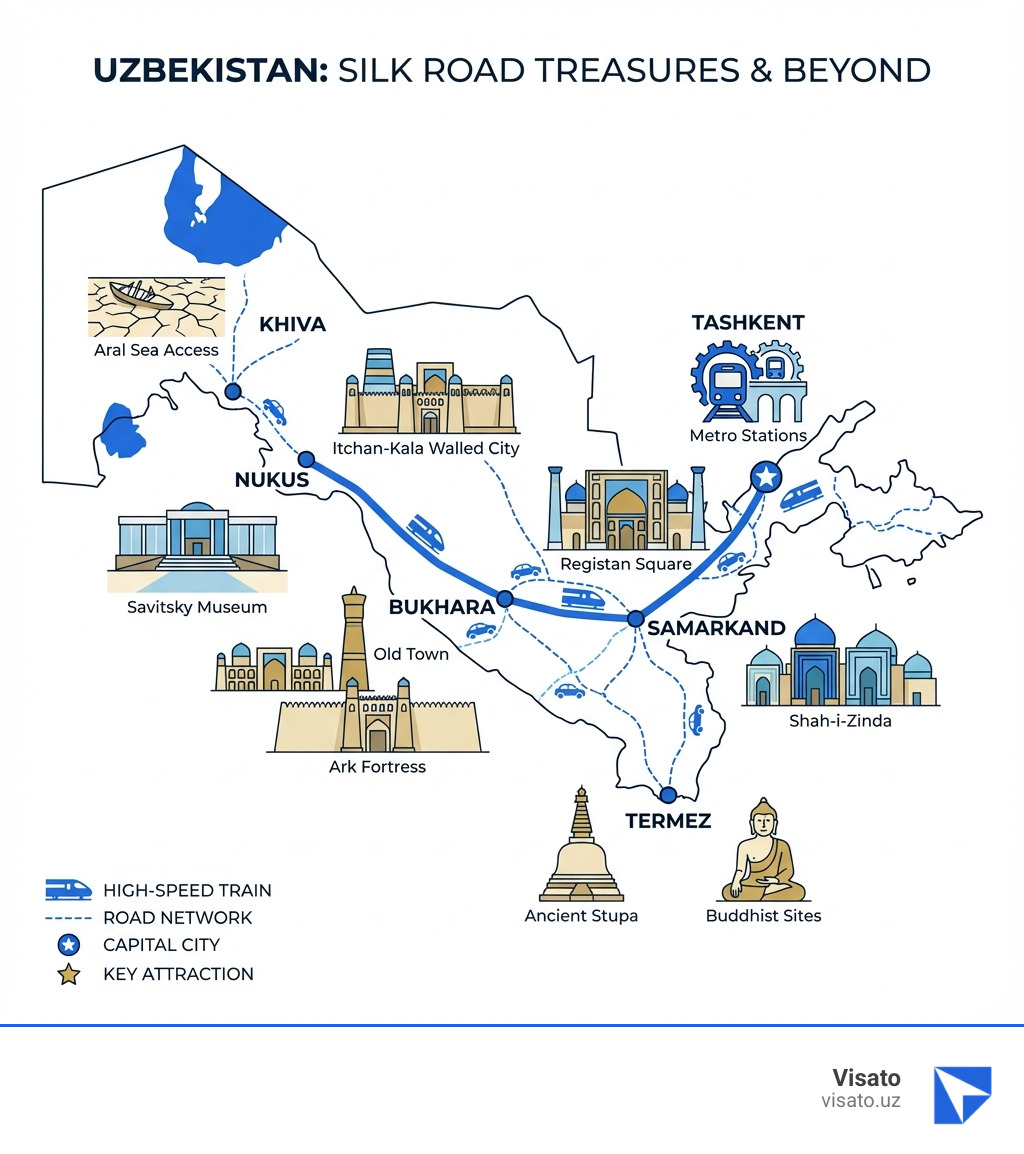
Easy what to see in uzbekistan glossary:
The Silk Road Jewels: Must-Visit Cities
Uzbekistan’s most famous attractions lie within its ancient cities, which served as vital hubs along the legendary Silk Road. These cities are living testaments to centuries of trade and culture. When considering what to see in Uzbekistan, these three UNESCO World Heritage cities are at the top of every list, each offering a unique window into the past.
Samarkand: What to See in Uzbekistan’s Crown Jewel
Samarkand, the “Crossroads of Cultures,” was the capital of Tamerlane’s empire and one of the grandest cities in the world. Its architectural marvels continue to mesmerize. If you’re wondering what to see in Uzbekistan that will leave you spellbound, Samarkand is your answer. Beyond the iconic Registan Square, don’t miss these sites:
- Bibi-Khanym Mosque: Built by Timur for his favorite wife, this colossal mosque is a stunning example of Timurid architecture. A local legend says crawling under its marble Quran stand brings blessings of children.
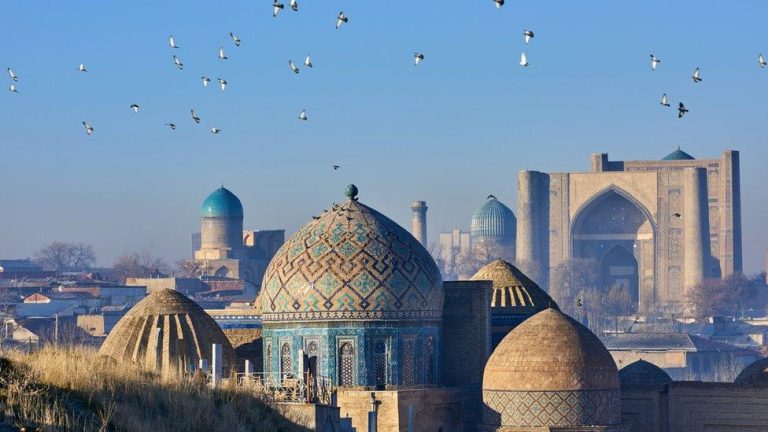
- Shah-i-Zinda Necropolis: Known as the “soul of Samarkand,” this complex of mausoleums features intricate, colorful tilework. For the best photos and fewer crowds, visit in the early morning or late evening.
- Gur-e-Amir Mausoleum: This mausoleum is the final resting place of Timur (Tamerlane). Its distinctive fluted azure dome offers a sense of understated elegance.
- Ulugh Beg Observatory: Once a leading 15th-century observatory in the Islamic world, its ruins, including a 30-meter curved track, testify to the region’s scientific history.
To make the most of your visit, dive deeper into our Samarkand Travel Guide 2025.
Bukhara: The Soul of the Silk Road
Stepping into Bukhara’s historic center, a UNESCO World Heritage site, feels like traveling back in time. It is one of Central Asia’s most well-preserved Persian cities and embodies the spirit of the Silk Road. For those exploring what to see in Uzbekistan, Bukhara offers an intimate and authentic experience. Key sights we recommend include:
- Poi Kalyan Complex: This iconic ensemble includes the majestic Kalon Minaret, Kalan Mosque, and Mir-i-Arab Madrasah. The 150-foot Kalon Minaret (1127), once called the “Tower of Death,” is famed for its intricate brickwork. The 16th-century Kalan Mosque remains an active and authentic place of worship.
- The Ark of Bukhara: This imposing fortress, a royal town-within-a-town from the 5th century to 1920, now houses a museum. Its spectacular exterior and historical significance are captivating.
- Lyabi-Hauz Ensemble: Built around a central pool in 1620, this charming square is a perfect spot to relax, drink tea, and observe local life.
- Chor Minor Madrasah: This quirky madrasah stands out with its four distinctive minarets. Its original purpose is a mystery, adding to its charm.
- Samanid Mausoleum: Completed in 905, this 10th-century architectural masterpiece is renowned for its intricate brickwork. It survived the Mongol invasion by being buried under mud for centuries.
For an in-depth guide to this enchanting city, check out our Bukhara Travel Guide 2025.
Khiva: What to See in Uzbekistan’s Living Museum
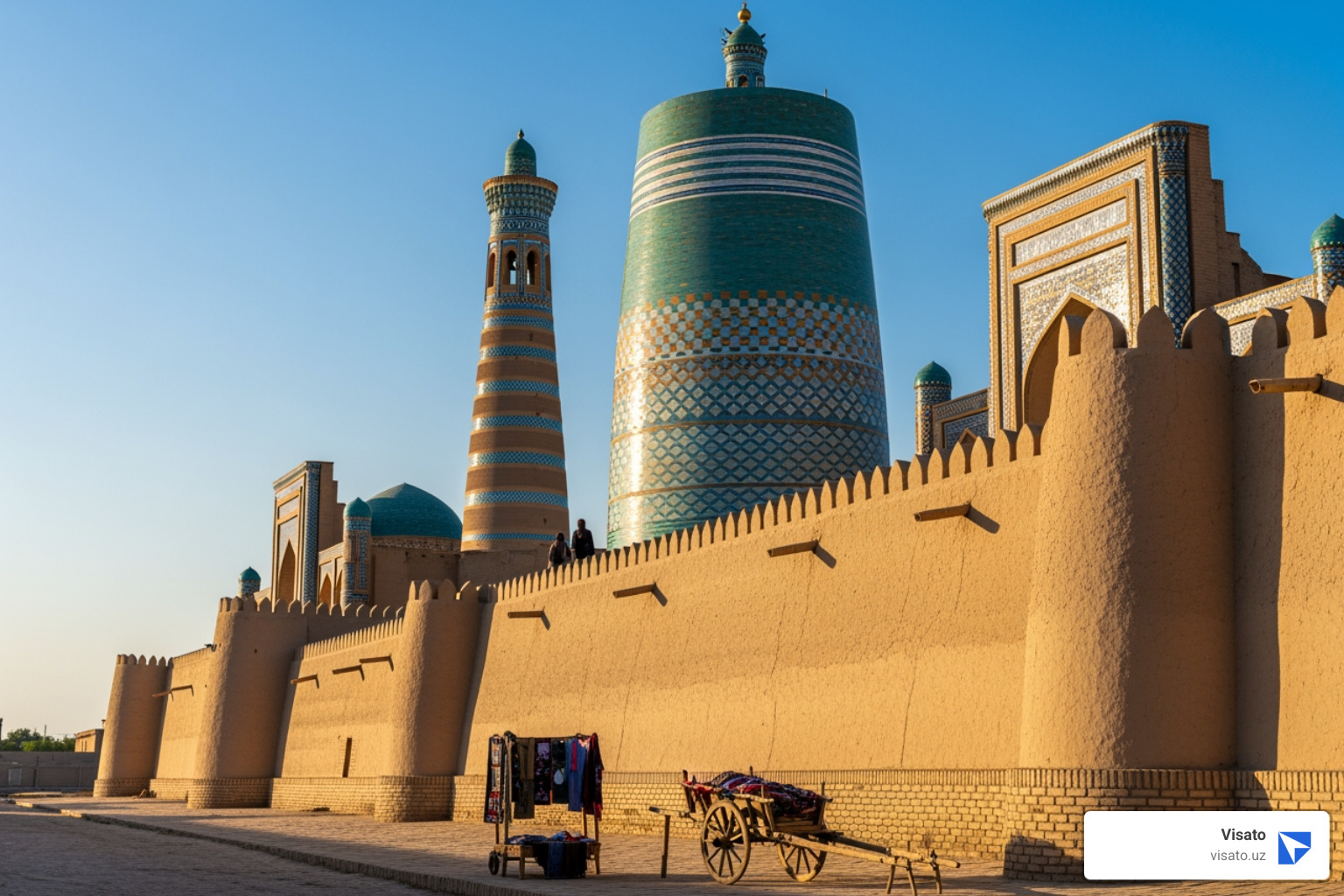
Khiva’s inner city, Itchan-Kala, is a perfectly preserved medieval walled town that feels like a living museum. A UNESCO World Heritage site since 1990, it offers an unparalleled glimpse into ancient Silk Road life. Many travelers find Khiva the most enjoyable city due to its compact, walkable nature. If you’re wondering what to see in Uzbekistan for an immersive historical experience, Khiva is a must. Highlights of Itchan-Kala include:
- Kalta Minor Minaret: This iconic, unfinished turquoise-tiled minaret is instantly recognizable. Legend says the Khan planned it to be tall enough to see Bukhara, but its architect died before completion.
- Juma Mosque: This unique mosque features a hall supported by 218 ancient wooden columns, some over 1,000 years old, with delicate carvings.
- Kunya-Ark Fortress: Once the residence of Khiva’s rulers, this fortress’s watchtower offers the best panoramic views of Itchan-Kala.
- Tash-Hovli Palace: Meaning “Stone House,” this palace features sumptuous interiors with blue ceramic tiles and carved wooden pillars, offering a glimpse into the opulent life of the Khans.
- Pahlavon Mahmud Mausoleum: This mausoleum, with its beautiful turquoise dome, is a pilgrimage site dedicated to Khiva’s patron saint, a poet and wrestler.
For a truly magical experience, take a sunset walk through Itchan-Kala. It’s an unmissable part of exploring Itchan Kala Khiva.
Iconic Architecture & History: What to See in Uzbekistan
Uzbekistan is a treasure trove of architectural wonders, with over 4,000 historical monuments and seven UNESCO World Heritage Sites. The country offers an incredible journey through time, from dazzling Islamic architecture to unique Soviet-era designs. For a comprehensive overview, check out our guide on Things to do in Uzbekistan.

The Registan (Samarkand)
The Registan Square, a UNESCO World Heritage site, is the heart of ancient Samarkand and arguably Central Asia’s most impressive architectural complex. This ensemble of three majestic madrasahs showcases stunning majolica and azure mosaics. It was once a public square for royal proclamations and executions.
The square is flanked by three magnificent madrasahs:
- Ulugh Beg Madrasah: Built in the 15th century, this was an institute of scientific learning under Timur’s astronomer grandson, Ulugh Beg.
- Sher-Dor Madrasah: Built in the 17th century, its facade famously depicts roaring felines, an unusual motif in Islamic art.
- Tilla-Kori Madrasah: Also from the 17th century, its name means “decorated with gold,” referring to the gilded gold leaf adorning its mosque’s interior.
For the best photos and fewer crowds, visit at 8 am to experience the square in serene morning light. Explore the second floor of a madrasah for a unique perspective.
Soviet & Modernist Tashkent
Tashkent, the capital, offers a fascinating contrast to the ancient Silk Road cities. Rebuilt after a 1966 earthquake with Soviet urban planning, it’s a modern metropolis with broad avenues. Exploring its Soviet-era architecture provides a unique narrative for those wondering what to see in Uzbekistan beyond the ancient.
The Tashkent Metro is a prime example, with stations renowned for their elaborate, themed Soviet-era designs—some even served as nuclear bunkers. Stations like Alisher Navoiy and Kosmonavtlar are stunning. A metro ride is a cheap, convenient, and unique way to see the city.
Other notable structures include the brutalist Hotel Uzbekistan and the modernist State Museum of History. For a glimpse of old Tashkent, explore the traditional “mohallas” (neighborhoods) by following an old Tashkent walking trail. For more details, see our Tashkent City Guide 2025.
Off-the-Beaten-Path Historical Gems
For the more adventurous traveler, Uzbekistan’s lesser-known sites offer deeper insights into its diverse heritage.
- Shakhrisabz: This UNESCO site and Timur’s birthplace is home to the ruins of the Ak-Saray Palace. Its immense scale hints at its former glory and the empire’s ambition. Find more about this historic center here: Historic Centre of Shakhrisabz.
- Fergana Valley: This fertile valley is a hub for traditional crafts. While it has fewer monuments, it features sites like Khudayar Khan’s opulent 19th-century palace in Kokand.
- Termez Buddhist Sites: In the south, Termez reveals Uzbekistan’s Buddhist past. The Fayaz Tepe Buddhist Monastery offers a rare glimpse into the ancient civilizations of the Surkhandarya region. Explore more with our Termez Travel Guide 2025.
- Savitsky Museum in Nukus: The Savitsky Museum in Nukus houses a world-class collection of Russian avant-garde art, hidden from Soviet authorities, making it a unique cultural gem.
- Ancient Fortresses of Khorezm: Explore ancient desert fortresses in Karakalpakstan like Ayaz-Qala (6th-7th centuries) and Toprak Qala (3rd-4th centuries) for a stark contrast to the tiled cities.
Immersive Cultural & Natural Experiences
Beyond its magnificent architecture, Uzbekistan offers vibrant culture and diverse natural landscapes. Connecting with local life, from busy bazaars to tranquil mountains, is at the heart of any visit.
Savoring Uzbek Cuisine
Uzbek cuisine is a feast for the senses. If you’re pondering what to see in Uzbekistan through a culinary lens, prepare for a delightful journey.
- Plov: This is Uzbekistan’s national dish, a way of life with over 30 regional variations. This hearty mix of rice, lamb, and vegetables is cooked for every occasion. Try it for lunch. In Tashkent, the Besh Qozon plov center serves different types from giant pots. Samarkand and Bukhara also have their own delicious local versions.
- Must-Try Dishes:
- Samsa: Delicious meat pies baked in a tandoor oven.
- Lagman: A hearty pulled noodle dish with meat and vegetables.
- Manti: Steamed dumplings, usually filled with meat.
- Shivit Oshi: A unique Khivan specialty of green dill pasta, served with meat and a creamy sauce.
- Gumma and Yumurta Barak: More unique and flavorful Khivan dumplings.
- Chaikhanas (Teahouses): Traditional teahouses are cultural hubs for relaxing with green tea and observing local life. Many also serve excellent plov.
- Bazaars: Visit local markets like Tashkent’s Chorsu Bazaar for an authentic culinary experience with fresh produce, spices, and delicious food stalls.
- Local Wines and Spirits: Alcohol is part of the local culture. Tashkent has bars and clubs, and drinks are available in smaller cities. Uzbekistan also has a reviving wine-making culture. Consider visiting the Uzumfermer family winery near Tashkent or the Hovrenko factory in Samarkand.
Vegetarian and vegan options are available, though meat is prevalent. Inform hosts of dietary needs in advance. The rooftop restaurant at Boutique Hotel Minzifa in Bukhara offers good vegan-friendly choices.
Engaging with Local Crafts & Culture
Uzbekistan’s culture is woven with centuries of artistic tradition. Exploring these aspects provides a richer understanding of the country.
- Rishton Ceramics: The Fergana Valley is renowned for its vibrant ceramics. Visit family-run potteries in Rishton to see master potters at work and explore the Rishton Ceramic Museum.
- Suzani Embroidery: This exquisite textile art features vibrant, intricate patterns and is a hallmark of Uzbek crafts. Find it in bazaars and specialty shops.
- Samarkand’s Meros Paper Mill: Find ancient mulberry papermaking at the Meros Paper Mill near Samarkand, a craft that once supplied the Silk Road.
- Sufi History: Bukhara is the birthplace of Sufi saint Bahauddin Naqshbandh Bukhari. Visit the serene Naqshbandh Sufi Memorial Complex near Bukhara to experience the mystical side of Islam that shaped the region’s culture.
- Traditional Hammams: For a relaxing cultural experience, visit a traditional hammam (bathhouse) in Bukhara. Historic options like Hammam Bozori-kord (men) and Kundjak Hammam (women) offer spa sessions.
- Miniature Painting & Fine Art: Explore miniature painting at the Bukhara School of Miniature Painting. Tashkent also has a growing modern art scene with galleries like Art Vernissage gallery.
Exploring Uzbekistan’s Diverse Landscapes
Beyond its cities, Uzbekistan offers diverse natural landscapes, from deserts to mountains, providing opportunities for outdoor adventure.
- Aral Sea Ship Graveyard in Muynak: The Aral Sea ship graveyard in Muynak is a poignant and unforgettable sight. Once the world’s fourth-largest lake, it has shrunk dramatically, leaving a desert of rusting ships. This haunting landscape is a stark reminder of environmental disaster. Plan a two-day 4WD tour from Nukus to visit. For more, see our Nukus Aral Sea Travel Guide 2025.
- Nuratau Mountains Homestays: For an authentic rural experience, stay in a homestay in the Nuratau Mountains. Hike, search for ancient petroglyphs, and enjoy local hospitality. Organizations like Responsible Travel Uzbekistan can arrange community-based tours.
- Chimgan Mountains & Amirsoy Ski Resort: Near Tashkent, the Chimgan Mountains offer great hiking. The modern Amirsoy mountain resort has made Uzbekistan a regional hub for skiing and snowboarding, with other options in Chatkal and Beldersoy.
- Zaamin National Park: Uzbekistan’s oldest nature reserve, Zaamin National Park, offers beautiful hiking trails and diverse wildlife for those seeking tranquility.
- Yurt Stays: For a nomadic experience, stay in a traditional yurt camp near Nurata or Aydarkul Lake. Activities often include camel riding, stargazing, and folklore performances.
Planning Your Uzbek Adventure: Practical Tips
Now that you have a clearer picture of what to see in Uzbekistan, let’s cover the practicalities. Effective planning ensures a smooth journey. Here are essential tips on transportation, accommodation, and the best times to visit. For more detailed advice, refer to our Uzbekistan Travel Tips 2025.
Best Time to Visit
Timing is crucial when planning your trip to Uzbekistan due to its climate.
- Spring (April-May): This is arguably the best time to visit. The weather is mild, landscapes are green, and you might catch the Navruz (Persian New Year) celebrations in March.
- Autumn (September-October): This is another excellent period with comfortable temperatures and clear skies. Bazaars are full of fresh produce from the autumn harvest.
- Avoid Summer (June-August): Summers are extremely hot, with temperatures often exceeding 40°C (104°F). Winters (November-March) are cold but offer quiet sites and mountain sports.
For a comprehensive guide on seasonal travel, check out our Best Time to Visit Uzbekistan.
Getting Around Uzbekistan
Traveling between Uzbekistan’s main cities is surprisingly efficient.
- High-Speed Trains (Afrosiyob): Modern Afrosiyob high-speed trains connect Tashkent, Samarkand, and Bukhara. Book tickets well in advance via the Uzbekistan Railways website as they sell out quickly.
- Night Trains: A night train from Tashkent to Khiva is a memorable 14-hour journey. Booking a “luxury” cabin ensures a comfortable trip.
- Shared Taxis (Marshrutkas): Shared taxis are a popular, economical, and lower-impact way to travel between towns for a local experience.
- Domestic Flights: For longer distances, like reaching Nukus for an Aral Sea tour, domestic flights save significant travel time.
- Tashkent Metro: In the capital, the ornate metro system is an attraction in itself. It’s a cheap, safe, and convenient way to steer Tashkent.
Accommodation & Hospitality
Uzbek hospitality is legendary, and accommodation options reflect this warmth.
- Family-Run Guesthouses: These offer a fantastic way to experience local life. At Gulnara Guesthouse in Tashkent, we enjoyed breakfast on a traditional tapchan (lounge seating).
- Boutique Hotels in Historic Buildings: In cities like Bukhara, stay in restored merchant houses like the Lyabi House Hotel, a former 19th-century trading home, for a blend of history and comfort.
- Traditional Homestays: For an immersive experience in rural areas like the Nuratau Mountains, consider a homestay. Organizations like Responsible Travel Uzbekistan can arrange stays with local families.
- Modern Hotels: Tashkent offers modern hotels like the iconic Soviet-era Hotel Uzbekistan, providing comfort and a central location.
Frequently Asked Questions about Visiting Uzbekistan
Here are answers to common questions about traveling to Uzbekistan to help you feel prepared for your journey.
Is Uzbekistan safe for tourists?
Yes, Uzbekistan is considered very safe for tourists, with low crime rates. Solo female travelers also report feeling secure. The government actively promotes tourism and visitor safety. As with any destination, exercise normal precautions, but you can generally travel with peace of mind. For more detailed safety information, please refer to our guide: Is Uzbekistan Safe for Tourists?.
How many days are enough for Uzbekistan?
We recommend 7 to 10 days to appreciate what to see in Uzbekistan and experience its culture. This allows enough time to comfortably explore the main Silk Road cities.
- 7-day itinerary: This would typically cover Tashkent, Samarkand, and Bukhara, moving fairly quickly.
- 10-14 day itinerary: This is ideal for digging deeper into each city and perhaps adding an off-the-beaten-path destination like the Nuratau Mountains or the Aral Sea.
What is the dress code in Uzbekistan?
Uzbekistan is a modern Muslim country, but it’s respectful to dress modestly, especially when visiting religious sites.
- For religious sites: We advise covering your shoulders and knees. While not required for tourists, carrying a scarf for women to cover hair is a thoughtful gesture.
- For general city exploration: In Tashkent, Western fashion is common. In more traditional settings, loose-fitting clothing that covers more skin is a good idea for comfort and respect.
Conclusion
Uzbekistan captivates with its blend of ancient history, vibrant culture, and diverse natural beauty. From the architectural wonders of Samarkand, Bukhara, and Khiva to Tashkent’s Soviet heritage and serene landscapes, there is an incredible array of what to see in Uzbekistan.
We hope this guide inspires your own Silk Road adventure. The warmth of Uzbek hospitality, rich cuisine, and grand historical sites promise an unforgettable journey.
Ready to explore this Central Asian gem? At Visato.uz, we specialize in a fast, simple, and secure online application process for your Uzbekistan e-visa, often delivering it in 2-3 business days with 24/7 support.
Create your dream Uzbekistan Travel Itinerary and let us handle the paperwork, so you can focus on making memories that will last a lifetime.