Why Understanding Medical Visa Processing Time Matters for Your Journey
Medical visa processing time varies significantly depending on your destination country and specific circumstances. Here’s what you need to know:
Quick Reference: Medical Visa Processing Times
| Country | Typical Processing Time | Key Requirement |
|---|---|---|
| Canada (Super Visa) | 8-12 weeks (3-6 months total) | Approved panel physician |
| New Zealand | 3 weeks (80% of cases) | Proof of treatment acceptance |
| South Korea (C-3-3) | 4 working days | Confirmed hospital appointment |
| India (Medical Visa) | 7-21 working days | Hospital treatment certificate |
| Saudi Arabia | 3 business days | Medical organization support |
| United States | Up to 1 week for medical results | Consulate-approved doctor |
Getting your visa after a medical update can feel like playing the waiting game, and it’s easy to get anxious when you’re unsure about what’s next. Whether you’re seeking specialized treatment abroad or accompanying a family member, understanding the timeline helps you plan better and reduces stress during an already challenging time.
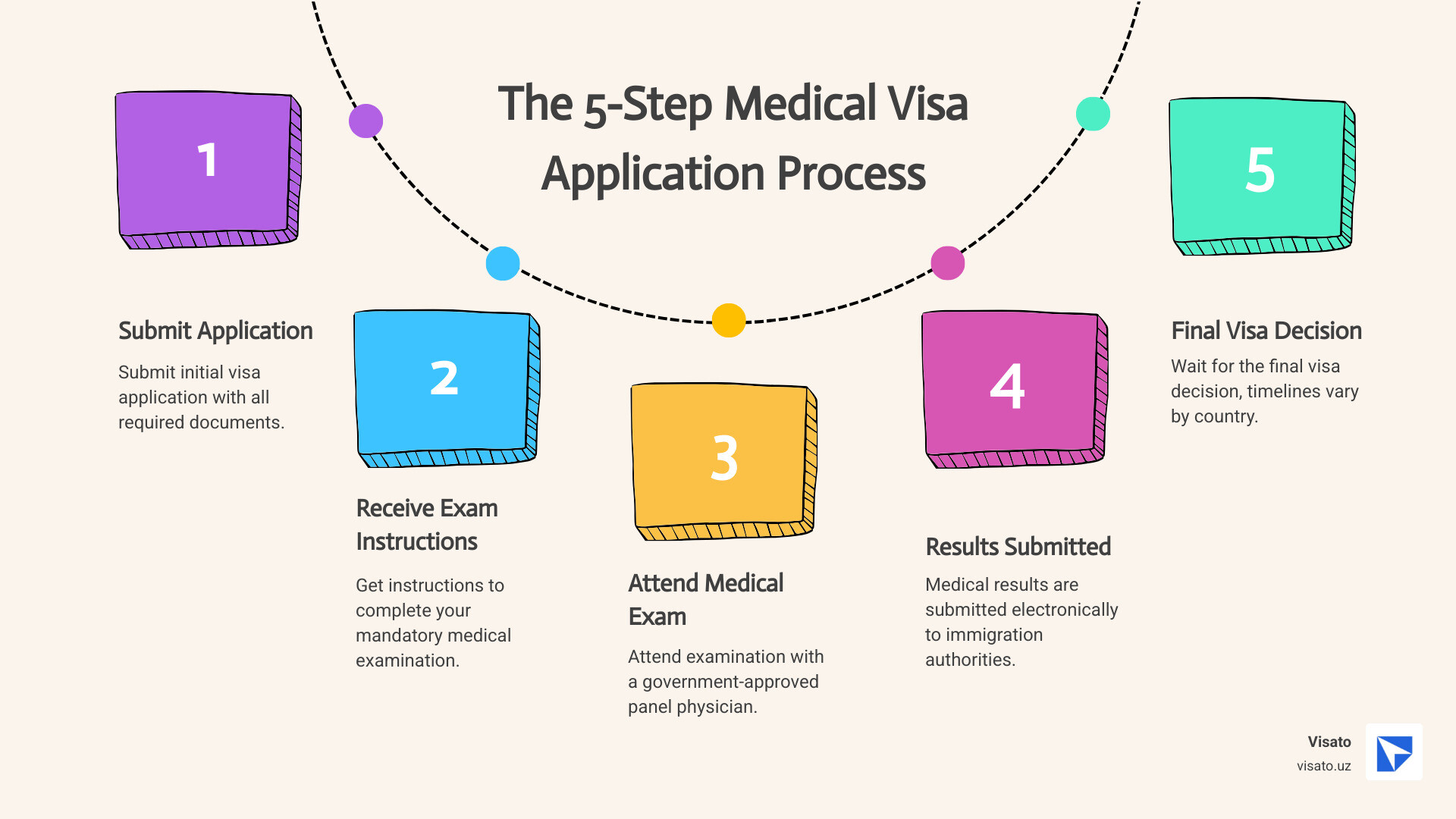
Medical visa processing time typically includes several phases: the initial application review, the mandatory medical examination, submission of results, and the final decision. After completing your medical examination, the test reports may take anywhere from one week to several months to process, depending on the country and visa type. For example, Canada’s Super Visa applications average 3 to 6 months from medical exam submission to visa approval, while South Korea processes medical tourism visas in just 4 working days.
I’m Nariman Huseynov, and through my five years of experience helping international travelers steer visa requirements at Visato, I’ve guided thousands of applicants through the complexities of medical visa processing time and global entry requirements. My team and I have seen how proper preparation can significantly reduce waiting periods and eliminate common delays.
The Medical Exam: Understanding Its Critical Role and Timeline
Think of the medical examination as your health passport to another country. It’s not just another form to tick off—it’s actually one of the most important parts of your medical visa processing time. Countries need to know that visitors won’t bring communicable diseases across their borders or require extensive healthcare resources that could strain their systems.
The medical exam serves two main purposes that immigration authorities take seriously. First, it protects public health by screening for diseases like tuberculosis that could spread to others. Second, it helps officials determine if your health condition might create what they call “excessive demand” on the country’s healthcare or social services. This matters especially if you’re planning a long-term stay or applying for permanent residency.
Here’s something that catches many applicants off guard: you can’t just visit any doctor for this exam. Only government-approved panel physicians can conduct immigration medical examinations. This might seem restrictive, but it’s actually designed to help you. These authorized doctors understand exactly what immigration authorities need, and they use a secure e-Medical system to send your results directly to organizations like Immigration, Refugees and Citizenship Canada (IRCC) or the U.S. Consulate General. No lost paperwork, no delays from missing documents—just a direct electronic submission that keeps your application moving.

The Examination Process
The moment you receive instructions to complete your medical examination, don’t put it off. Scheduling quickly can shave weeks off your total waiting time. When your appointment day arrives, you’ll want to bring several items with you to avoid any delays or the need to reschedule.
Your passport or valid ID is essential—the doctor needs to confirm your identity. Bring your visa application forms or reference numbers so the physician can properly link your results to your file. If you have any chronic conditions or past illnesses, pack your existing medical records. A list of current medications helps the doctor understand your health picture, and your immunization records are crucial since many countries have specific vaccination requirements. If you wear glasses or contacts, bring those too—you might need them for the exam.
The examination itself is thorough but straightforward. The panel physician will conduct a physical exam and review your medical history with you. For anyone aged 15 or older, expect blood tests to screen for conditions like syphilis. A chest X-ray is standard to check for tuberculosis. The United States actually requires tuberculosis testing for all applicants aged two and older, so this is taken very seriously across borders.
One practical note: you’ll pay the medical examination fees directly to the physician. These costs aren’t included in your visa application fees, so budget accordingly.
How to Track Your Medical Exam Status
After your exam is complete, you’ll naturally wonder when the results will reach immigration authorities. The good news is that you’re not completely in the dark during this waiting period.
Start by confirming submission with your clinic. Before you leave the appointment, ask the panel physician’s office to confirm they’ve electronically submitted your results through the e-Medical system. Most clinics will give you a confirmation receipt or reference number. Keep this document safe—you might need it later.
For many applications, particularly Canadian temporary resident visas, you can check for updates within 30 days of your exam date using the online application portal. This is your window to confirm that immigration authorities have actually received your medical results. The portal will show when your medical exam status changes to “completed,” which means the results are now part of your file and under review.
Different countries have different systems, but most offer some way to track progress. Canada’s system is particularly transparent—you can find detailed guidance on checking your application status through their official channels. Make it a habit to check your portal regularly, but don’t obsess over it. Once every few days is plenty.
If your results don’t show up within the typical timeframe for your country, don’t panic. Sometimes there are technical delays or backlogs. Contact your panel physician first to verify they submitted everything correctly. If the issue persists, you may need to reach out to the immigration authorities directly through their official channels.
This tracking period is when your patience gets tested, but remember—the e-Medical system was designed to speed things up, not slow them down. Most medical results are processed much faster than they were in the days of paper submissions, directly impacting your overall medical visa processing time in a positive way.
A Deep Dive into Medical Visa Processing After the Medical Exam
Your medical exam is complete, and now you’re wondering what happens next. This is where your application enters what I call the “behind-the-scenes” phase, where government immigration authorities like Immigration, Refugees and Citizenship Canada (IRCC) or the U.S. Citizenship and Immigration Services (USCIS) take over. These organizations handle various types of medical visas, from temporary visitor visas for medical treatment to comprehensive permanent residency applications. The type of visa you’re applying for plays a big role in how thorough and lengthy this review process will be.
Understanding Medical Visa Processing Timeframes
Let’s talk numbers. The medical visa processing time after your exam varies quite a bit depending on where you’re applying and what type of visa you need. For Canadian Super Visa applications in 2025, you’re typically looking at 8 to 12 weeks for the entire application to process. But here’s the thing: the period specifically after your medical exam submission can stretch from 3 to 6 months on average before you receive your visa.
This isn’t just one long waiting period. Your application actually moves through distinct phases after the medical results are submitted. In the immediate post-medical phase, which usually takes 1 to 4 weeks, your panel physician finalizes and electronically submits your results, and the immigration authority registers them in their system. Then comes the review and assessment phase, lasting anywhere from 2 to 8 weeks, where medical officers carefully examine your results to confirm you meet all health requirements. They’re looking for anything that might need a closer look. Finally, in the final decision phase, which typically takes 1 to 4 weeks, if your medical results are cleared, your application moves forward for the visa officer’s final decision.
Understanding these stages helps explain why the wait feels long even after you’ve completed your part of the process.
Factors Influencing Medical Visa Processing Time
So what makes some applications move faster than others? Several factors come into play, and knowing them can help you set realistic expectations.
Application volume is a big one. Immigration offices handle thousands of applications simultaneously, and when they’re particularly busy, processing naturally slows down. Think of it like a popular restaurant during dinner rush hour.
Medical complexity matters significantly. If your examination reveals health conditions that require additional review by medical officers, your case will take longer. This isn’t necessarily bad news, but it does mean more thorough evaluation is needed.
The completeness of your application can make or break your timeline. Missing documents or incomplete information will pause your application until everything is provided. This is one area where you have complete control.
Your country of origin or where you’re applying from also influences processing times. Different visa offices face different workloads, staffing levels, and regional priorities, which means processing speeds vary between locations.
Immigration departments calculate their processing times based on current application inventory, available staff, and expected future volumes. These estimates are updated regularly and include the time needed for biometrics. You can learn more about how processing times are calculated directly from official sources.
For Super Visa applications specifically, the medical examination isn’t just another checkbox. It’s a critical eligibility requirement. A cleared medical exam is absolutely essential for your application to move to the final decision stage. Any concerns flagged during the medical review directly impact your processing timeline and can even influence the final outcome.
How to Minimize Delays
While you can’t control everything about the medical visa processing time, there are practical steps you can take to keep things moving smoothly.
Schedule your medical exam immediately once you receive the request. Every day you wait adds time to your overall process. The clock doesn’t really start ticking until your exam is complete and submitted.
Only use approved panel physicians for your examination. This is crucial. Results from non-approved doctors won’t be accepted, meaning you’ll have to start over with the right physician. That’s a delay nobody wants.
Check your online account regularly and respond quickly to any requests for additional information or documents. Immigration authorities might need clarification or follow-up tests, and fast responses keep your application moving forward instead of sitting in a queue.
Keep your health insurance valid throughout the entire process if you’re applying for a Super Visa. Your mandatory health insurance policy must meet IRCC requirements without any lapses. Insurance issues can create unnecessary complications.
If you’ve completed an Immigration Medical Exam within the past five years, provide your previous IME number or unique medical identifier. This information can sometimes help streamline the review process since authorities can access your recent medical history.
One question we often hear at Visato is about the difference between processing times for permanent residents versus temporary residents in Canada. The medical examination itself is quite similar for both, but the impact on overall processing differs. For temporary residents like Super Visa applicants, the medical exam results are directly tied to the visitor visa decision, and you can often check your medical exam status within 30 days. For permanent residents, the medical exam is one component of a much more extensive review process. While medical delays will hold up a PR application, the overall timeline for permanent residency is generally longer and involves many more checks than temporary visas.
Global Perspectives on Medical Visa Processing Time
If you’re considering medical treatment abroad, you’ve probably realized by now that medical visa processing time isn’t a one-size-fits-all situation. Each country has crafted its own approach to medical visas, with timelines that can range from impressively quick to frustratingly lengthy. Understanding these differences helps you choose your destination wisely and plan your journey with realistic expectations.
Country-Specific Timelines
New Zealand has earned a reputation for efficiency when it comes to medical treatment visas. If you’re applying for a Medical Treatment Visitor Visa to receive care there, you can expect 80% of applications to be processed within just 3 weeks. This speed isn’t accidental—it’s the result of stringent upfront requirements that ensure only well-prepared applications enter the system. When you submit everything correctly from the start, everyone benefits.
South Korea takes a different approach but achieves similarly impressive results. Their C-3-3 Medical Tourism Visa processes in a remarkable 4 working days, reflecting the country’s strategic commitment to medical tourism. There’s a catch, though: you can’t apply directly. Instead, you’ll need to work through appointed travel agents, which adds a layer of coordination but maintains the speed once your application is submitted.
India’s system offers flexibility but requires patience. The country provides both a Medical Visa and a Medical Attendant Visa for those accompanying patients. Processing times vary considerably based on your nationality and where you’re applying. Canadian nationals applying in Toronto might see their visa processed in 7 working days, while non-Canadian nationals should expect 15 to 21 working days. If you’re submitting your application by post, add another 3 to 4 working days to your timeline. These are estimates, and your mileage may vary depending on factors like which city you’re applying from and where your passport was originally issued.
Saudi Arabia has streamlined its medical visa process by placing the responsibility on medical organizations within the Kingdom. These institutions initiate the visa request on behalf of international patients, and the standard processing time is a swift 3 business days. Of course, exceptional cases requiring additional documentation or verification can extend this timeline, but the baseline is impressively fast.
For those heading to the United States, the medical examination itself is just one piece of a larger puzzle. The exam results typically take up to one week to obtain, and this is a mandatory step before your visa interview. While the overall U.S. immigrant visa process can stretch considerably longer, getting your medical clearance quickly is crucial for keeping your application moving forward.
Key Requirements Across Borders
Despite the wide variation in processing times, you’ll notice some common threads running through medical visa applications worldwide. These universal requirements exist because every country needs to balance compassion for medical travelers with practical concerns about healthcare resources and immigration integrity.
Proof of treatment sits at the heart of every medical visa application. You’ll need official documentation from a recognized medical institution in your destination country. This isn’t just a casual letter—immigration authorities want to see your diagnosis, a detailed treatment plan, and an estimated duration for your stay. Taiwan, for instance, requires a diagnosis and treatment proposal specifically from a Taiwan medical institution. This documentation serves as the foundation of your entire application.
Financial evidence is equally critical. Countries want reassurance that you can cover your medical expenses and living costs without relying on their social services. This might mean providing bank statements showing sufficient funds, a payment plan that your medical institution has agreed to, or sponsorship letters from family members. New Zealand makes this explicit in their requirements, asking for proof of sufficient funds or an acceptable sponsor who can vouch for your financial stability during treatment.
The return ticket requirement might seem straightforward, but it carries significant weight. Immigration officers want to see that you intend to leave after your treatment concludes. Proof of onward travel or a return ticket demonstrates this commitment and helps distinguish medical visitors from those who might overstay their visa.
Accompanying person rules reflect a compassionate understanding that medical patients often need support from family members. New Zealand allows your partner and dependent children (aged 19 and younger) to be included directly in your Medical Treatment Visitor Visa application. Taiwan permits up to two accompanying family members—typically a spouse or relatives within the third degree—and even allows up to two medical personnel if your condition requires specialized care during travel. India has formalized this support system with a specific Medical Attendant Visa, recognizing that caregivers play a vital role in successful treatment outcomes.
The landscape of medical visa processing time across different countries reveals both challenges and opportunities. Some nations have acceptd medical tourism with streamlined processes, while others maintain more cautious approaches. Understanding these differences empowers you to make informed decisions about where to seek treatment and how to prepare your application for success.
Navigating Complications: Delays, Health Issues, and Inadmissibility
Sometimes, despite your best efforts, the medical visa processing time stretches longer than you hoped. Health issues finded during your medical exam can add weeks or even months to the wait. It’s completely natural to feel anxious when this happens, but understanding what’s actually going on behind the scenes can help you feel more in control during this challenging time.
What Happens if Health Issues Are Found?
Finding a health issue during your medical exam doesn’t automatically mean your visa will be refused. That’s the first thing to remember when you’re feeling worried. What usually happens instead is that the immigration authorities will ask for more information or additional tests to get a clearer picture of your situation.
For example, if your chest X-ray shows something unclear, or if blood work reveals an anomaly, you might be asked to undergo more specialized testing. Perhaps you’ll need to see a specialist or provide medical records from your doctor back home. The immigration medical officer needs to understand the nature and severity of your condition before making any decisions.
This additional review process naturally extends your medical visa processing time. The medical officer’s job is to assess whether your condition poses a risk to public health or whether it might place an excessive demand on the country’s health services. This assessment takes time, but it’s also thorough and considers your individual circumstances. Many applicants successfully steer this stage and receive their visas once the additional information is provided.
Understanding Medical Inadmissibility
Now, let’s talk about the elephant in the room: can certain medical conditions actually prevent you from getting a visa? The honest answer is yes, but it’s not as black-and-white as you might fear. Medical inadmissibility generally falls into two main categories.
The first involves conditions that pose a risk to public health. This primarily means active, communicable diseases that could spread within the host country. Active tuberculosis is the most common example. If you’re diagnosed with active TB during your medical exam, immigration authorities take this very seriously because of the potential to infect others.
The second category is conditions that could cause excessive demand on the country’s publicly funded health or social services. This is where things get more nuanced. Not every health condition falls into this category. Immigration officers look at whether your condition would require substantial ongoing care or services that exceed a certain cost threshold. They consider factors like the availability of treatment, the projected costs over time, and whether there are ways to mitigate the demand.
Each case receives an individual assessment. Immigration policies often include provisions for humanitarian and compassionate considerations. What matters is the specific circumstances of your situation, not just a diagnosis on paper. If you receive a procedural fairness letter, this means the immigration authority has concerns but is giving you an opportunity to respond before making a final decision.
Steps to Take if Your Visa is Delayed for Medical Reasons
If your visa application hits a delay because of medical reasons, staying calm and proactive is your best strategy. The waiting is hard, but there are concrete steps you can take to help move things forward.
First, stay informed by checking your online application portal regularly. This is where you’ll receive any requests for additional information or tests. Don’t wait for email notifications alone—log in and check for updates every few days. If you receive a procedural fairness letter explaining the immigration authority’s concerns, read it carefully and note any deadlines for your response.
Respond to any requests immediately and thoroughly. If they ask for further tests or documentation, treat it as urgent. Every day you delay in responding adds to your overall medical visa processing time. Gather whatever information they need and submit it as quickly as possible.
Your panel physician is your ally in this process. Contact them for clarification if you don’t understand what additional tests are needed or why certain concerns have been raised. They’re familiar with immigration medical requirements and can help ensure that any follow-up examinations are completed correctly and submitted through the proper channels.
If you have existing medical records, treatment plans from specialists, or expert medical opinions that could help explain your condition, provide them proactively. Sometimes a letter from your treating physician explaining that your condition is well-managed or doesn’t require ongoing treatment can make a significant difference.
Be aware that medical exams have a validity period, typically around 12 months. If your application takes longer than expected, you might be asked to undergo a new medical examination because your previous one has expired. This is frustrating, but it’s a standard requirement to ensure current health information. Make sure all family members included in your application have valid medical exams at the same time.
Finally, if the delay becomes significant or you receive a procedural fairness letter raising concerns about inadmissibility, consider seeking professional immigration advice. An experienced immigration consultant or lawyer can help you understand the specific concerns, formulate the best response, and present your case in the strongest possible light. They’ve seen these situations before and know how to steer them effectively.
At Visato, while we specialize in streamlined e-visa services for Uzbekistan, we understand how stressful medical-related visa delays can be. The key is staying informed, responding promptly, and not losing hope. Many applicants who face initial medical concerns go on to receive their visas once the immigration authorities have the complete picture.
Conclusion: Taking Control of Your Application Journey
If there’s one thing we’ve learned from guiding thousands of applicants through their visa journeys, it’s this: knowledge truly is power. Understanding medical visa processing time transforms what feels like an unpredictable waiting game into a manageable process where you can take meaningful action at every step.
Throughout this guide, we’ve seen just how much timelines can vary. Saudi Arabia might process your medical visa in a swift 3 business days, while a Canadian Super Visa could take 3-6 months after your medical exam. New Zealand’s efficient system clears 80% of applications in 3 weeks, and South Korea moves medical tourism visas through in just 4 working days. These aren’t just random numbers—they reflect different systems, priorities, and requirements that you can prepare for.
The medical examination stands at the heart of this journey. It’s not bureaucracy for its own sake—it’s about protecting public health and ensuring healthcare systems can serve everyone fairly. When you approach it as a critical checkpoint rather than an obstacle, you’ll understand why preparation is your greatest asset.
What does good preparation look like in practice? It starts with proactive planning—researching your destination country’s specific requirements well before you need to travel. It means gathering your documents thoroughly—medical records, financial proofs, treatment letters—so nothing slows your application down. When you receive that medical exam instruction, schedule it immediately with an approved panel physician. And once your application is in motion, check your online portal regularly and respond to any requests the same day you receive them.
We’ve also explored the complications that can arise. Health issues finded during your exam don’t automatically mean refusal, but they do require patience and careful follow-up. Medical inadmissibility is assessed individually, considering your specific circumstances. If delays happen, staying calm and responsive makes all the difference.
The waiting period can feel overwhelming, especially when you’re dealing with health concerns or supporting a loved one who needs treatment abroad. That’s completely understandable. But remember: a well-prepared application with complete documentation, timely medical exams, and prompt responses gives you the best possible chance of a smooth process.
For those planning travel to Uzbekistan, Visato.uz offers a refreshingly straightforward alternative. Our streamlined service delivers e-visas in as little as 2-3 business days, with 24/7 support whenever you need help. We handle the complexity so you can focus on what really matters—your health, your family, and your journey ahead.
Learn more about different visa types and their requirements for your next journey.