Why eVisas Are Changing Global Travel Forever
eVisas are digital travel documents that replace traditional paper visas. They allow travelers to apply online without visiting an embassy, as the visa is stored electronically and linked to your passport number, making travel simpler.
Quick Answer: What You Need to Know About eVisas
- What it is: A digital visa linked to your passport.
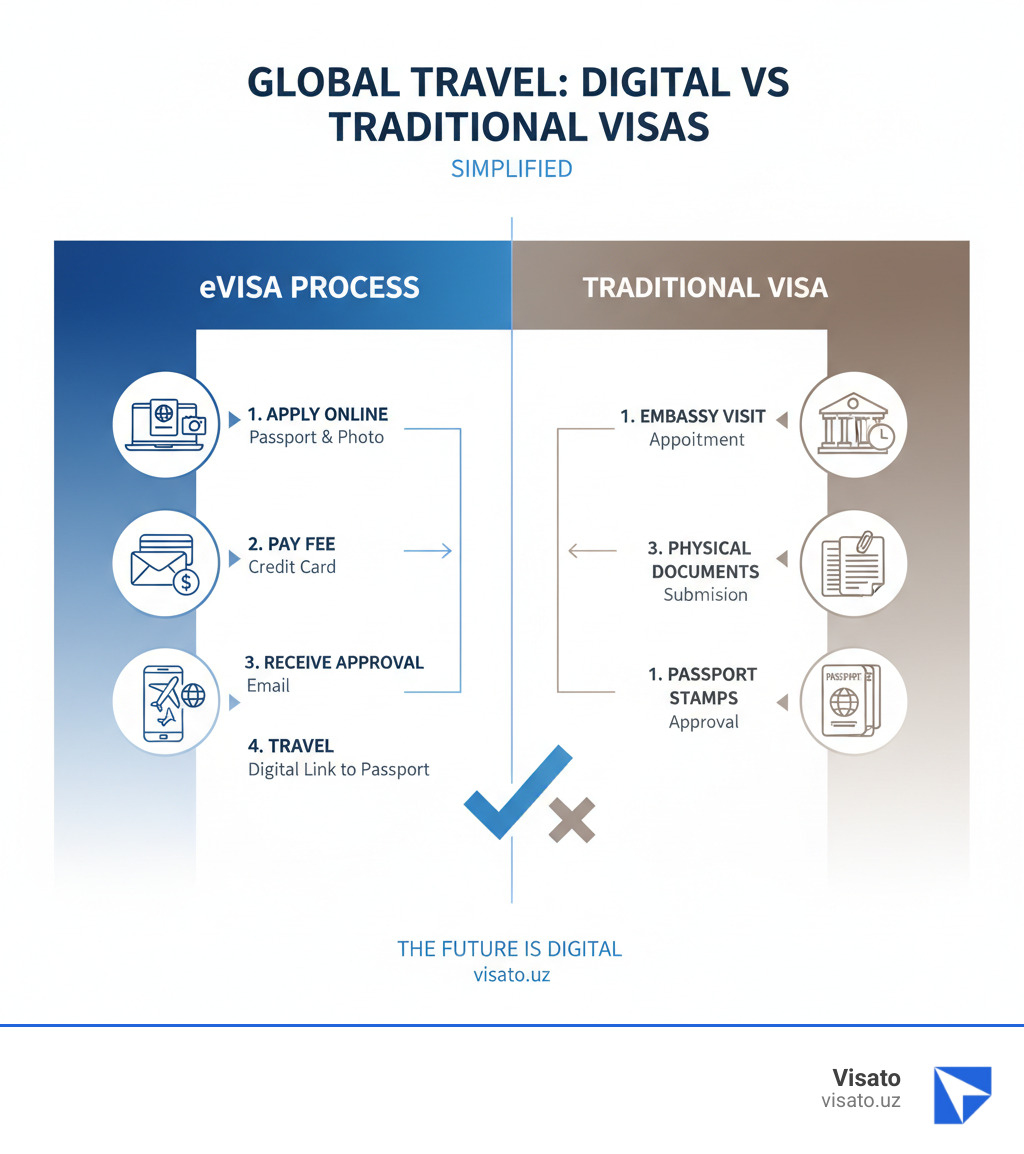
- How to get it: Apply online, upload documents, pay a fee, and get approval by email.
- Processing time: From a few business days to several weeks.
- Cost: Varies by country, from $20 to over $100.
- Key benefit: No embassy visits or passport stickers.
Traditional visa applications involved embassy appointments and long waits. eVisas eliminate that hassle. Since the 2000s, countries have adopted these systems to streamline border control. Nations like Turkey, India, and Australia process millions of applications online, and even the EU plans a digital visa platform for 2026. The shift is clear: paper is out, digital is in.
I’m Nariman Huseynov from visato.uz. With over 5 years of experience helping travelers from 60+ countries steer evisas, I’ll guide you through everything you need to know for your next trip.
Evisas terms at a glance:
What is an eVisa? Explaining Digital Travel Authorizations
An eVisa is an electronic visa—a digital record of your identity, immigration status, and visit conditions. Instead of a paper label in your passport, it’s stored electronically and linked to your passport number. When an immigration officer scans your passport, your eVisa details appear on their screen.
The entire process is online. You apply via a government portal, upload digital documents, pay with a credit card, and receive approval by email. No embassy appointments, no mailing your passport, and no physical stickers are needed before you travel.
Countries worldwide are embracing this shift. The UK, for example, is replacing physical documents like Biometric Residence Permits with eVisas as part of a global move toward simpler, more secure digital travel.
Understanding the different types of eVisas
The world of electronic travel documents includes eVisas, ETAs, and traditional visas.
Traditional visas require paper forms, in-person embassy visits, and a physical sticker placed in your passport. They are typically for longer stays, work, or study.
Electronic visas (eVisas) move the process online. You upload scanned documents, pay electronically, and receive email approval in days. Your authorization is linked to your passport number, ideal for tourism and short business trips.
Electronic Travel Authorizations (ETAs) are pre-arrival screenings for travelers from visa-exempt countries. They aren’t technically visas but are required to board a flight. ETAs are processed quickly (sometimes in minutes) and are used by countries like Australia (ETA), Canada (eTA), and the US (ESTA).
Here’s how they compare:
| Feature | Traditional Visa | eVisa | ETA (Electronic Travel Authorization) |
|---|---|---|---|
| Application Method | In-person/Mail to Embassy | Online Portal | Online Portal |
| Physical Document | Yes (sticker/stamp) | No (digital record) | No (digital record) |
| Processing Time | Weeks to Months | Days to Weeks | Minutes to Days |
| Typical Use Case | Long-term stay, Work, Study | Tourism, Short-term Business | Short-term Tourism/Business (visa-exempt) |
The Key Benefits for Travelers and Governments
The shift to eVisas benefits both travelers and governments.
For travelers, the advantages are clear:
- Convenience: Apply from anywhere, anytime, without taking time off for embassy visits.
- Reduced Paperwork: Simply upload digital files instead of managing physical documents.
- Faster Processing: Most eVisas are approved in days, not weeks, reducing stress and allowing for more spontaneous travel.
Governments also gain significantly:
- Increased Efficiency: Automated systems process more applications with fewer resources.
- Improved Security: Systems enable quick, thorough background checks against international databases like Interpol.
- Better Border Management: Instant digital verification at borders means shorter lines and faster processing at airports.
- Economic Boost: Easier travel encourages tourism. Research on the effect of visa policies on international tourism confirms that streamlined visa processes increase visitor numbers and economic activity.
The Global Landscape of eVisas: Who Offers Them and What’s Required?
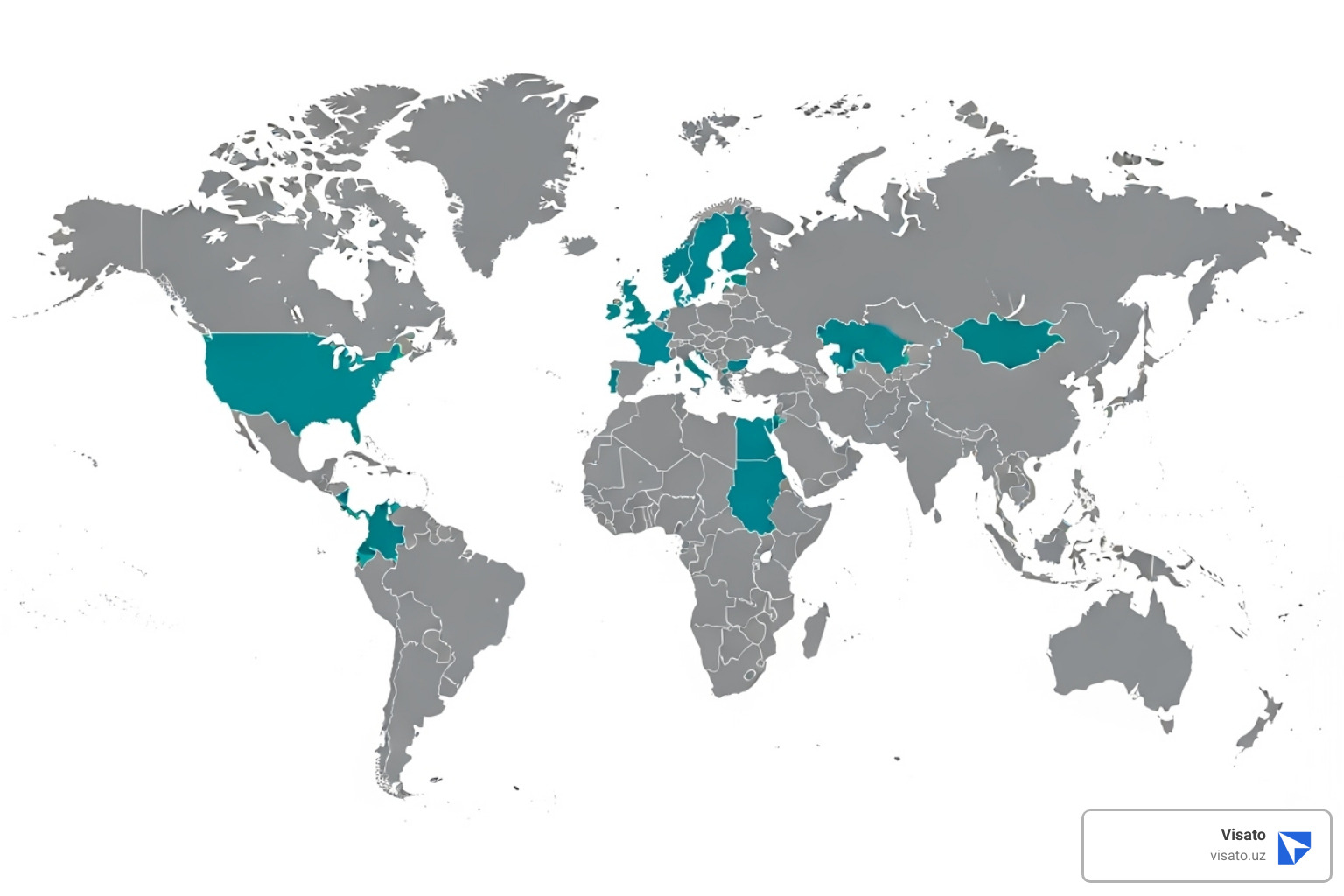
The adoption of eVisas has grown from a few countries in the 2000s to a global standard. Dozens of nations now use electronic systems, and physical immigration documents are becoming relics. Major powers are also adapting. The UK is replacing Biometric Residence Permits with digital alternatives, and the European Union is launching a unified digital visa platform in 2026. This isn’t just a trend—it’s the future of travel.
Countries Leading the Way with eVisa Systems
The list of countries offering digital visas grows annually. Here are some of the leaders:
- Australia: A pioneer with its Electronic Travel Authority (ETA) and eVisitor programs for short-term visits.
- India: Offers various e-visa categories for tourism, business, and medical visits, accessible through 26 designated airports.
- Turkey: Provides a straightforward eVisa for tourism and business, requiring a passport valid for at least 60 days beyond the stay.
- Vietnam: Is actively modernizing its Electronic Visa Portal (thithucdientu.gov.vn and evisa.gov.vn).
- Kenya: Uses a manual assessment system for e-visas and ETAs, typically taking about three days.
- Uzbekistan: Central Asia’s gem has acceptd eVisas. At Visato, we specialize in helping travelers steer this process. Find more info about the Uzbekistan e-Visa on our site.
- Other Key Countries: Saudi Arabia now offers tourist e-visas. Canada requires an eTA for air arrivals from most visa-exempt countries. The United States requires an ESTA for Visa Waiver Program travelers. South Korea requires a K-ETA for eligible visa-free visitors.
The United Kingdom is rolling out its ETA for visa-free nationalities through 2025 and replacing all physical immigration documents with eVisas. The European Union is introducing ETIAS for visa-exempt nationals and plans a full digital visa system for 2026.
Many other nations, including Bahrain, Egypt, Ethiopia, Japan, New Zealand, Oman, Pakistan, Russia, and Sri Lanka, have also joined the digital revolution.
Common requirements for obtaining eVisas
While specific requirements vary, most eVisa applications follow a similar pattern.
- Valid Passport: Must typically be valid for at least six months beyond your intended entry date.
- Digital Photograph: A recent, clear, passport-style photo meeting the country’s specific size and format requirements.
- Online Application Form: Requires accurate personal and travel details that exactly match your passport.
- Valid Email Address: Essential for receiving your eVisa approval and all application-related communications.
- Payment Method: A credit or debit card (like Mastercard, Visa, or UnionPay) enabled for international transactions.
- Travel Itinerary: Some countries may ask for proof of flights, hotel bookings, or a Letter of Invitation.
- Nationality: Requirements can differ significantly based on your passport, so always check the rules for your specific situation.
Your Step-by-Step Guide to the eVisa Application
Applying for an eVisa is designed to be simple, but attention to detail is crucial. Here’s a walkthrough of the typical process, from starting the application to receiving your approval.
How to Apply and Avoid Common Pitfalls
The entire eVisa process is online. You can apply through the official government portal or a trusted service provider like Visato.
- Check Eligibility: Confirm your nationality qualifies for an eVisa and your travel purpose is covered.
- Fill Out the Online Form: Enter your details exactly as they appear on your passport. Most systems allow you to save your progress.
- Upload Documents: Submit a clear scan of your passport’s bio page and a digital passport-style photo. Some countries may require proof of flights or accommodation.
- Pay the Fee: Use a credit or debit card. Ensure it’s enabled for international payments.
- Receive Your eVisa: Once approved, your eVisa will arrive via email. Save it and print a copy. For a detailed guide on Uzbekistan, see how to apply for an Uzbekistan visa online.
To ensure a smooth process, avoid these common pitfalls:
- Incorrect Information: Typos or mismatched details between your application and passport are the top reason for rejection. Information often cannot be changed after submission.
- Poor Quality Scans: Blurry or non-compliant photos and documents will cause delays. You’ll likely be asked to re-upload corrected versions.
- Payment Failures: If a payment fails due to insufficient funds or bank blocks, contact support before trying again.
- Applying Too Late: While faster than traditional visas, eVisas are not instant. Apply well in advance of your travel date.
- Using Unofficial Websites: Stick to official government portals or accredited services like ours to avoid excessive fees and incorrect information.
If you encounter issues with an Uzbekistan application, our Uzbekistan e-Visa Problems Complete Guide can help.
Understanding eVisa Costs and Fees
eVisa costs typically include a government fee and, if you use a third-party, a service fee.
- Government Fee: The official charge from the destination country. This varies widely; for example, the East African Community single tourist visa is 100 USD.
- Service Fee: If you use a service like Visato, this fee covers the expertise and support to ensure your application is handled correctly and efficiently.
Be wary of hidden charges on unofficial sites. Reputable providers are transparent about all costs upfront. Also, factor in currency conversion fees your bank may charge if you’re paying in a foreign currency. Most platforms accept major credit/debit cards like Mastercard, Visa, and UnionPay.
The Future of International Travel
The shift to eVisas is just the beginning of a larger change in global travel. We are moving toward a future where biometric data and digital identity are standard. Imagine immigration checks using facial recognition, eliminating the need for physical documents.
Behind the scenes, eVisa applications already trigger automated background checks against international security databases like Interpol, enhancing safety before you even travel. This efficiency is also good for economies. Studies, including research on The effect of visa policies on international tourism, show that streamlined visa policies boost tourism and economic activity.
Upcoming Trends: What to Expect Next
The next few years will bring even more significant changes:
- Widespread Adoption: More countries, including Belarus, Ghana, and South Africa, are launching or planning their own eVisa platforms, making it a global standard.
- The EU’s Digital Overhaul: The EU’s ETIAS system is just the start. By 2026, a unified digital visa system is planned for the entire Schengen Area, creating a single, paperless process for all visa applicants.
- The UK’s Fully Digital Border: By 2025, the UK will require an Electronic Travel Authorisation (ETA) for most visa-free visitors and will have replaced all physical immigration documents (like Biometric Residence Permits and visa stickers) with eVisas.
- US Digital Visa Initiatives: The US Department of State is developing a Digital Visa Authorization (DVA) as a potential replacement for traditional sticker visas.
The era of physical documents like passport stamps and permit cards is ending. The future of travel is digital, secure, and convenient. At Visato, we’re excited to help travelers steer these new systems with ease.
Frequently Asked Questions about E-Visas
Navigating eVisas can bring up questions. Having helped thousands of travelers, we’ve compiled answers to the most common concerns.
How long does it take to get an eVisa?
Processing times vary by country and application volume.
- ETAs (like for Australia or Canada) can be approved in minutes or hours.
- Most eVisas (for countries like India, Turkey, and Uzbekistan) take 2-3 business days to a week. At Visato, we aim for 2-3 business days for an Uzbekistan eVisa.
- Some countries, like Kenya, use manual assessment, which can take a few days.
- Peak travel seasons can extend processing times to several weeks.
Our advice: Apply at least two to three weeks before your departure to avoid last-minute stress.
What should I do if my eVisa application is rejected?
A rejection isn’t necessarily the end of your travel plans.
- Read the rejection notice carefully. It will usually explain the reason, such as a typo, a poor-quality photo, or ineligibility.
- Correct the error and re-apply. If it was a simple mistake, you can usually submit a new, corrected application. Be meticulous and double-check everything.
- Look for an appeal process. Some countries allow you to appeal a decision if you believe it was unjustified.
- Apply for a traditional visa. If you are ineligible for an eVisa or are repeatedly rejected, applying for a traditional visa at an embassy is your backup plan.
Using a service like Visato can reduce the risk of rejection, as we review applications for accuracy before submission.
Do I need to carry a printed copy of my eVisa?
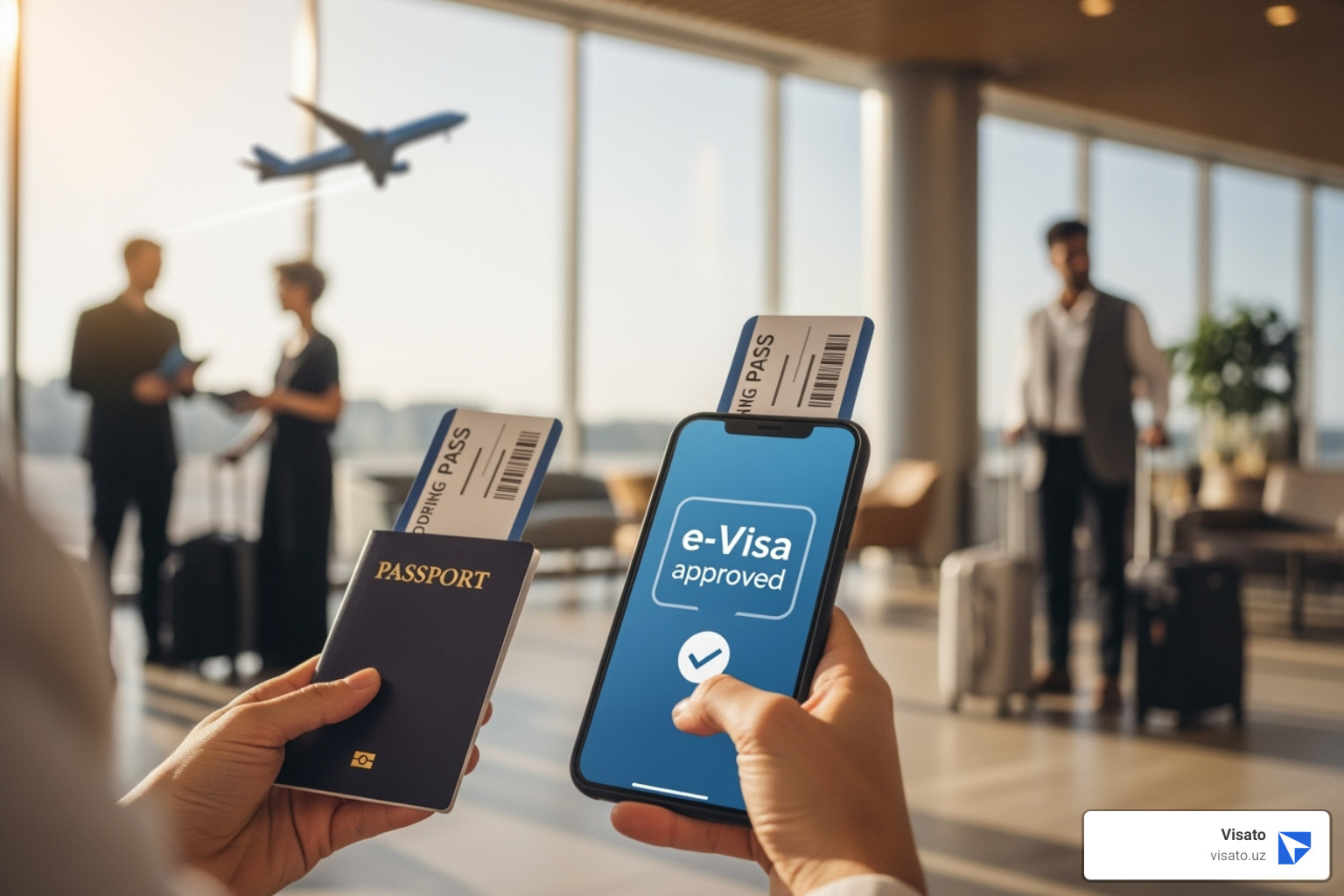
While your eVisa is digitally linked to your passport, we strongly recommend carrying a printed copy and keeping a digital version on your phone.
Think of it as an insurance policy. A printed copy is useful if:
- Your phone battery dies or your device is lost.
- The airline check-in agent needs to see proof of your visa. Not all airline systems are integrated with immigration databases.
- There’s a technology glitch at the immigration counter. An officer can quickly verify a physical document.
While some countries are fully digital, others still find paper backups helpful. It’s a simple, weightless precaution that can save you significant time and stress. Being over-prepared is always better than being underprepared.
Conclusion
eVisas have fundamentally changed international travel, making it more accessible, efficient, and secure. The days of embassy queues and long waits for passport returns are being replaced by streamlined digital processes.
We’ve covered how eVisas work, their benefits, and why they are becoming the global standard. The future is clear: with initiatives like the EU’s unified digital visa and the UK’s ETA rollout, physical immigration documents are becoming history.
As you plan your next trip, remember these key tips:
- Be meticulous: Ensure your application details exactly match your passport.
- Apply in advance: Give yourself plenty of time to avoid last-minute issues.
- Use trusted sources: Stick to official government portals or secure service providers.
- Carry copies: Keep both printed and digital copies of your approved eVisa when you travel.
At Visato, our service is designed to make this digital transition seamless, especially for travel to Uzbekistan. We offer 24/7 support and aim to deliver your eVisa in just 2-3 business days, because travel should be about findy, not paperwork.
Whether you’re planning to explore Samarkand, Tashkent, or Bukhara, we’re here to help you take the first step.
Ready to experience how simple modern travel can be?